



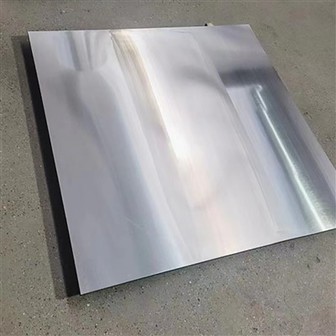
Platinum Coated Titanium Anode Mesh
Item: Platinum Coated Titanium Anode Mesh
Applications: Electroplating/Electrolysis
Coating: Platinum
Dimensions: Customers' Requirement
Substrate: Gr2
Purity Ti Content (%): 99.6%
Shape: Customized
Color: Silver
Material: MMO titanium
Inspection: ISO9001:2015, SGS
Coating thickness:0.5~10μm
Product Introduction
Description
Platinum Coated Titanium Anode Mesh: Titanium as the base material, plated on the surface of precious metal platinum, platinum coating compact structure, appearance is bright silver white, has the characteristics of high anode discharge current density, long service life, etc. Compared with other titanium base coating platinum technology, platinum-coated titanium anode mesh is a layer of pure platinum plating on the surface of a titanium deposit.
|
Substrate |
Platinum coating |
Processes |
Coating thickness |
Specifications |
electric Current |
|
|
Gr1/Gr2 titanium |
Pure platinum, platinum-iridium |
Electroplating, brush plating |
0.5μm-10μm |
Tailored according to customer needs |
≤5000A/m2 |
|
|
|
Manufacturing processes
A platinum-coated titanium anode mesh is an electrocatalytic electrode in electrochemistry, which is coated with pure titanium substrate and noble metal oxide.
Matrix treatment: roughing, cleaning, and degreasing are required to improve the compactness of the catalyst.
Brush and dry. After the substrate is treated, it is brushed. The main coating component is platinum group metal. Then, heat treatment is performed after drying. The whole process needs to be repeated several times.
Characteristics of Platinum-Coated Titanium Anode Mesh:
1. Platinum-coated titanium anode mesh includes pure platinum anodes, platinum-plated anodes, etc. Because platinum has good electrocatalytic activity and corrosion resistance, it is the anode material of choice in many fields. However, due to its high price, in actual use, titanium-based platinum-plated anodes have good electrocatalytic activity and relatively low cost and are more commonly used.
2. Good electrocatalytic activity;
3. Diverse use environment;
4. Withstand large current density;
5. Combined with our anode manufacturing process, the bonding force between the platinum layer and the substrate is strong, and it is not easy to fall off;
6. Technical services are available, and the substrate can be used repeatedly to save costs.


Tips
1. Before using the platinum-coated titanium electrode mesh, it is necessary to exclude (must be detected) the existence of "fluorine" ions and "phosphate" ions in the plating solution, and only after confirming that there is no chemical composition that corrodes the platinum-coated titanium electrode. Use platinum-coated titanium electrode mesh safely, otherwise, the bottom substrate of platinum-coated titanium electrode mesh will be severely corroded, the platinum coating will fall off, and the service life will be shortened. Do not use hard chromium additives and recycled industrial chromic anhydride containing fluoride ions.
2. Reasonable selection of the process: the current density of the platinum-coated titanium electrode mesh is below 50A/dm2, and the tank pressure is below 10V, otherwise the service life will be affected, and the anode will be seriously corroded and dissolved, and the coating will fall off. Try to choose an anodizing reaction The process without solid oxide generation avoids oxide thickening and passivation affecting the conductivity of platinum-coated titanium electrodes. The reason for anode breakdown is determined by the inherent characteristics of the titanium material itself. When the cell pressure is greater than 10V, the titanium surface in contact with the platinum coating begins to dissolve slightly and breaks down at 12V. After the breakdown, the cell pressure we see can no longer show 12V. Only about 11V can be seen. At this time, the current can no longer be added, and the anode is damaged. Therefore, the pressure of the tank for the safe use of platinum-coated titanium electrodes is set below 10V.
3. In principle, the surface area of the cathode should be smaller than the effective anode area (that is, the anode area under the liquid surface). It should not be used when the anode area is smaller than the cathode area, otherwise, the anode will be easily broken down and cannot be used normally.
4. When the impedance of the plating tank increases, the tank pressure will also increase. When the tank voltage exceeds 10V, the current should not be increased, but the current should be adjusted appropriately, such as the current being reduced by 10%, and the plating time being extended by 10%.
Applications
Water ion generator and water electrolysis, making alkaline and acidic water
Electroplating industry, gold plated, Rhodium plated, Hard chrome plated
Electroanalysis, electrolytic cell, sensing element, electro galvanizing, electro chlorination
Oxygen or hydrogen production
Wastewater treatment
Precious metal recycling, gravure printing
Cathodic Protection Application
Seawater inlets, heat exchangers and condensers, docks and tanks, and water heaters.
Hot Tags: platinum coated titanium anode mesh, China platinum coated titanium anode mesh manufacturers, suppliers, factory
You Might Also Like


Send Inquiry
