

What equipment is needed for stamping?
Yo, fellow stamping enthusiasts! I'm running a forging and stamping supply business, and I'm super stoked to share the lowdown on the equipment you need for stamping. Whether you're a newbie just dipping your toes into the stamping world or a seasoned pro looking to upgrade your setup, this blog's got you covered.
Let's kick things off with the heart of any stamping operation - the stamping press. This bad boy is what applies the force needed to shape your materials. There are different types of stamping presses out there, each with its own perks.
Mechanical presses are like the workhorses of the stamping world. They use a mechanical flywheel to store energy and then transfer it to the ram, which does the actual stamping. These presses are known for their high speed and precision, making them perfect for mass-producing simple parts. They're pretty common in industries where you need to crank out a large number of identical pieces, like automotive manufacturing. Check out High Purity Titanium Sputtering Target for some cool projects that might require this kind of high - volume stamping.
Hydraulic presses, on the other hand, rely on hydraulic fluid to generate force. They're a bit slower than mechanical presses but offer more control over the stamping process. This makes them ideal for complex stamping jobs where you need to apply different levels of force at different stages. If you're working on something like Titanium Round Target that requires careful shaping and precise force application, a hydraulic press could be your best bet.
Next up, we've got dies. Dies are like the molds that give your stamped parts their shape. There are two main types: blanking dies and forming dies.
Blanking dies are used to cut out a flat piece of material from a larger sheet. This is the first step in creating many stamped parts. They need to be really sharp and well - made to ensure clean cuts. A good blanking die can make a huge difference in the quality of your final product.

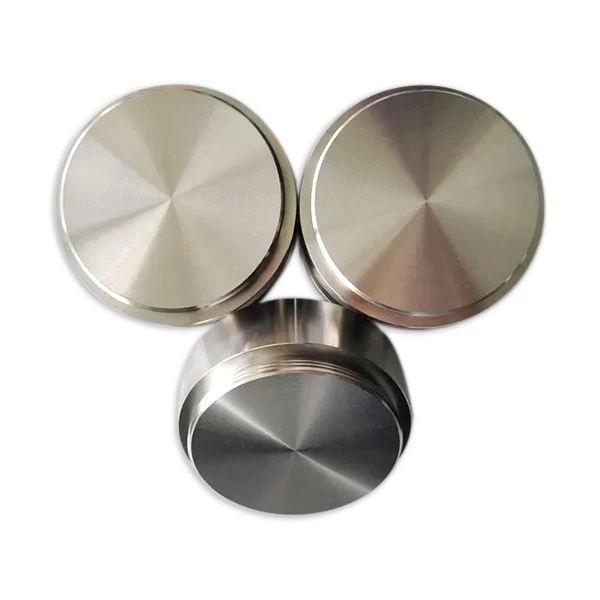
Forming dies, as the name suggests, are used to bend, stretch, or otherwise reshape the blanked material into the desired form. This could involve creating curves, angles, or even three - dimensional shapes. For something like Titanium Forged Disc, you'll definitely need some high - quality forming dies to get that perfect shape.
Now, let's talk about material handling equipment. You can't just leave your materials lying around on the floor. You need a way to move them around the stamping area safely and efficiently.
Conveyor belts are a great option for moving large quantities of materials. They can be set up to transport materials from one machine to another, keeping your production line flowing smoothly. You can adjust the speed of the conveyor belt to match the pace of your stamping operations.
Crane systems are also useful, especially when you're dealing with heavy or large - sized materials. They can lift and move materials with ease, reducing the risk of injury to your workers. And let's face it, nobody wants to be lugging around heavy sheets of metal all day!
In addition to these big - ticket items, there are also some smaller but equally important pieces of equipment.
Lubrication systems are crucial for reducing friction between the dies and the material during stamping. This not only helps to extend the life of your dies but also improves the quality of your stamped parts. Without proper lubrication, you might end up with rough surfaces or even damage to the material.
Inspection tools are a must - have. You need to be able to check the quality of your stamped parts regularly. This could include things like calipers to measure dimensions, micrometers for precise measurements, and surface roughness testers. Catching any defects early on can save you a lot of time and money in the long run.
Safety equipment is non - negotiable. Stamping can be a dangerous job, so you need to make sure your workers are protected. This includes things like safety glasses to protect their eyes from flying debris, gloves to prevent cuts and burns, and ear protection to block out the noise from the presses.
Now, I know all this equipment can seem a bit overwhelming, especially if you're just starting out. But don't worry! As a forging and stamping supplier, I've got the expertise to help you choose the right equipment for your specific needs. Whether you're looking to set up a small - scale stamping operation or expand an existing one, I can offer you a range of high - quality equipment at competitive prices.
If you're interested in learning more about the equipment we offer or have any questions about stamping in general, don't hesitate to reach out. We can have a chat about your project, and I'll do my best to find the perfect solutions for you. Starting a new stamping project or upgrading your current setup? Let's get the ball rolling and make your stamping dreams a reality!
References
- Smith, J. (2020). The Basics of Stamping Equipment. Metalworking Magazine.
- Johnson, R. (2021). Advanced Stamping Techniques and Equipment. Manufacturing Today Journal.