

How does the forging process work?
How does the forging process work? Well, let me tell you, as a forging and stamping supplier, I've got some real - world experience to share on this topic.
First off, let's understand what forging is. Forging is a manufacturing process where metal is shaped by applying compressive forces. It's been around for ages, and it's a super important way to make strong and reliable metal parts.
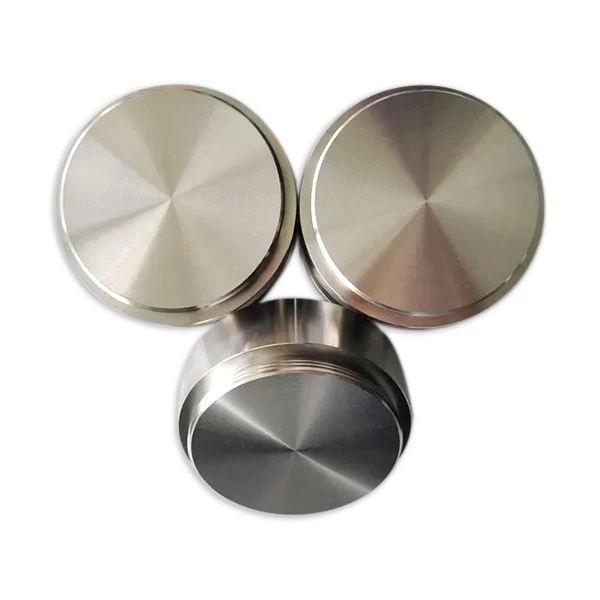
The process starts with the selection of the right metal. We work with all sorts of metals, but titanium is one of our favorites. Titanium is known for its high strength - to - weight ratio, corrosion resistance, and biocompatibility. That's why products like Titanium Round Target and High Purity Titanium Sputtering Target are in high demand.
Once we've picked the metal, we heat it up. Heating is a crucial step. The metal needs to be at the right temperature so that it can be shaped easily without cracking. Different metals have different optimal forging temperatures. For titanium, we usually heat it to a specific range, which allows it to become malleable.
After heating, it's time for the actual forging. There are two main types of forging: open - die forging and closed - die forging.
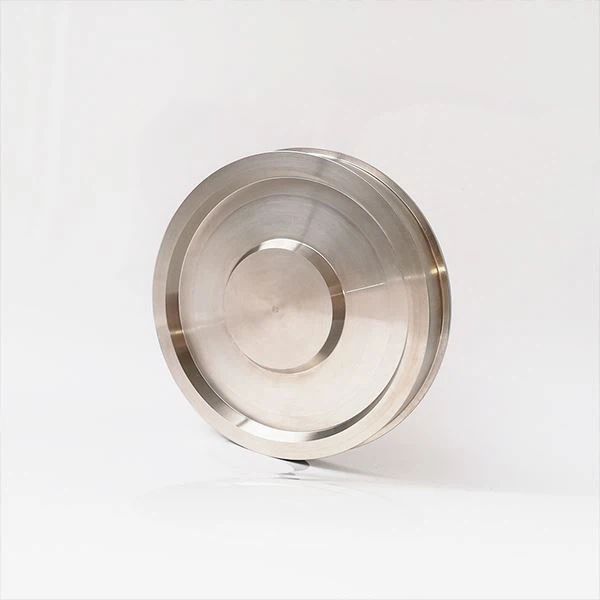
In open - die forging, the metal is placed between two flat or shaped dies, and the force is applied to deform the metal. This method is great for making simple shapes or for pre - shaping the metal before further processing. It gives us a lot of flexibility in terms of the size and shape of the final product. For example, we can use this method to start making a Titanium Forging Ring. We start with a piece of heated titanium and gradually shape it into a ring - like form using the open - die forging process.
Closed - die forging, on the other hand, uses dies that are shaped to the exact form of the final product. The heated metal is placed in the die cavity, and then a large amount of force is applied. This process can create very complex shapes with high precision. It's like pressing a metal cookie cutter into the heated metal to get the exact shape we want. The advantage of closed - die forging is that it can produce parts with tight tolerances and consistent quality.
During the forging process, we also need to control the amount of force applied. Too much force can cause the metal to crack or break, while too little force won't shape it properly. We use specialized equipment, like hydraulic presses or hammers, to apply the right amount of force. These machines are calibrated to ensure that the forging is done correctly.
After the initial forging is complete, the part often goes through some finishing processes. This can include machining, where we use tools to remove any excess material and to achieve the final dimensions and surface finish. Heat treatment is another common finishing step. Heat treatment can improve the mechanical properties of the forged part, such as its hardness, strength, and toughness.
Quality control is a big part of our process. We inspect every forged part to make sure it meets the required standards. We use various techniques, like non - destructive testing (NDT), to check for any internal defects. This way, we can guarantee that our customers get high - quality products.
Another aspect we focus on is cost - effectiveness. We try to optimize the forging process to reduce waste and energy consumption. For example, we recycle any scrap metal generated during the process. This not only helps the environment but also keeps our costs down, which allows us to offer competitive prices to our customers.
Now, you might be wondering how forging compares to other manufacturing processes, like casting. Well, casting involves pouring molten metal into a mold. While casting can be used to make complex shapes easily, the forged parts are generally stronger. The forging process aligns the metal grains in a way that gives the part better mechanical properties. This is especially important in applications where strength and reliability are crucial, like in aerospace and automotive industries.
In the aerospace industry, for example, forged titanium parts are used in engines and structural components. The high strength - to - weight ratio of titanium makes it ideal for reducing the weight of the aircraft, which in turn improves fuel efficiency. In the automotive industry, forged parts are used in critical components like crankshafts and connecting rods. The superior strength of forged parts ensures better performance and safety.
We also offer customization services. If you have a specific design or requirement for a forging or stamping product, we can work with you to make it happen. Our team of experts has the knowledge and experience to turn your ideas into reality.
In conclusion, the forging process is a complex but fascinating way to make high - quality metal parts. From the selection of the metal to the final finishing touches, every step is carefully controlled to ensure the best possible product. Whether you're looking for a Titanium Round Target, a High Purity Titanium Sputtering Target, or a Titanium Forging Ring, we've got you covered.
If you're interested in our forging and stamping products, don't hesitate to reach out for a purchase negotiation. We're always ready to discuss your needs and provide you with the best solutions.
References
- "Metal Forming: Processes and Applications" by Kalpakjian and Schmid
- "Titanium: A Technical Guide" by Don Eylon