

What are the effects of material ductility on forging and stamping?
Hey there! As a forging and stamping supplier, I've seen firsthand how material ductility can have a huge impact on our processes. So, I thought I'd dive into the topic and share my insights with you.
First off, let's talk about what ductility actually is. In simple terms, ductility is a material's ability to be deformed under tensile stress without breaking. It's like when you stretch a piece of chewing gum - if it can stretch a long way without snapping, it's pretty ductile. In the world of forging and stamping, ductility is super important because it determines how easily a material can be shaped into the desired form.
One of the major effects of high material ductility in forging and stamping is the ease of deformation. When a material is highly ductile, it can be hammered, pressed, or stamped into complex shapes without cracking or breaking. This means we can create parts with intricate designs and tight tolerances, which is a huge advantage in industries like automotive, aerospace, and electronics. For example, in the aerospace industry, we use highly ductile metals like titanium to create parts that need to withstand extreme conditions. The High Purity Titanium Sputtering Target is a great example of a product that benefits from high ductility. It can be precisely shaped to meet the exact specifications of the manufacturing process.
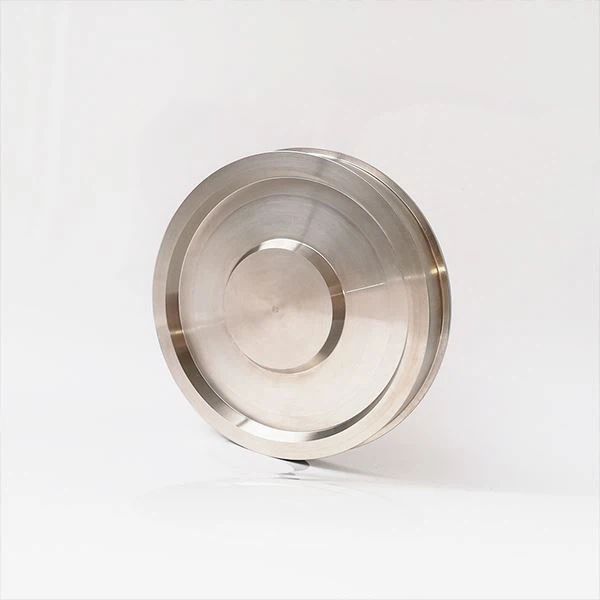

Another benefit of ductile materials is that they can handle large amounts of strain during the forging and stamping processes. This means we can perform multiple operations on a single piece of material to achieve the final shape. For instance, we might start by forging a large billet into a rough shape and then use stamping to add finer details. Ductile materials can endure these repeated deformations without losing their structural integrity. Take the Pure Titanium Crucible as an example. The crucible needs to be formed through a series of forging and stamping steps, and its ductility allows it to be shaped without any issues.
Ductility also plays a crucial role in the quality of the final product. When a material is ductile, it tends to have a more uniform grain structure after forging and stamping. This results in better mechanical properties, such as improved strength and toughness. A part made from a ductile material is less likely to fail under stress or during normal use. For example, the Titanium Pellets, when produced using forging and stamping techniques on ductile titanium, have excellent physical and chemical properties.
However, it's not all sunshine and rainbows when it comes to ductility. There are some challenges associated with working with highly ductile materials. One of the main issues is that they can be more difficult to machine. Since they are so malleable, they can tend to deform and stick to the cutting tools, which can lead to poor surface finishes and increased tool wear. This means we need to use special machining techniques and tools to work with ductile materials effectively.
Another challenge is that highly ductile materials can be more expensive. Materials like high - purity titanium, which is known for its excellent ductility, are often more costly due to the complexity of their extraction and refining processes. This can impact the overall cost of the forging and stamping operations, and we need to factor this into our pricing for customers.
In addition, ductility can also affect the dimensional accuracy of the parts. When a ductile material is deformed, it can sometimes spring back slightly after the forging or stamping process is complete. This "spring - back" effect needs to be carefully considered during the design and manufacturing process to ensure that the final part meets the required dimensions.
Despite these challenges, the advantages of using ductile materials in forging and stamping far outweigh the disadvantages. The ability to create complex, high - quality parts makes ductile materials a top choice for many industries.
If you're in the market for forging and stamping services, or if you're interested in our products like the High Purity Titanium Sputtering Target, Pure Titanium Crucible, or Titanium Pellets, don't hesitate to reach out. We're here to help you find the best solutions for your specific needs. Whether you need a small batch of custom parts or a large - scale production run, we've got the expertise and the resources to get the job done right.
Let's start a conversation about how we can work together. We're excited to see how we can use our knowledge of material ductility and forging and stamping processes to bring your ideas to life.
References
- Callister, William D., and David G. Rethwisch. Materials Science and Engineering: An Introduction. Wiley, 2017.
- Dieter, George E. Mechanical Metallurgy. McGraw - Hill, 1986.
- Totten, George E., et al. Handbook of Forging. CRC Press, 2004.