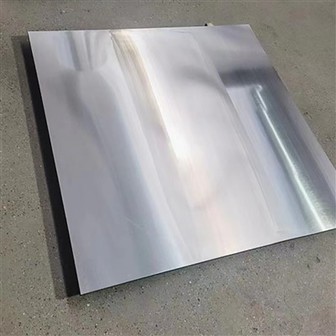
Classes and Grades of Titanium
The list below describes the titanium classes and the grades that fall under them, along with their composition, features, and applications.
Alpha (α) Titanium
This class covers pure titanium and titanium alloys that are stabilized with elements like aluminum. They are super strong and ductile (although less so than other classes), formable, lightweight, corrosion resistant, and have high-temperature stability. Of the alpha class, Xometry offers Grade 2 titanium parts via CNC machining or sheet cutting.
Grade 1 pure titanium
Composition: 99% titanium, 0.2% iron, 0.18% oxygen, and trace amounts of other elements such as nitrogen, carbon, and hydrogen
Features: The softest, most ductile, and most formable of all the grades
Applications: Plating, piping, tubing, automotive, power generation, aerospace
Grade 2 pure titanium
Composition: 99% titanium, 0.3% iron, 0.25% oxygen, and trace amounts of other elements
Features: Slightly stronger than Grade 1, more affordable than other grades as it's more widely used and so produced in larger volumes
Applications: Welding, anodizing, lining material, power generation, petroleum
Grade 3 pure titanium
Composition: 99.2–99.7% titanium, with a maximum of 0.30% iron, 0.35% oxygen, 0.08% carbon, 0.05% nitrogen, and 0.015% hydrogen
Features: Least commonly used pure titanium grade, stronger than Grades 1 and 2 but less ductile and formable
Applications: Anodizing, cryogenic vessels, condenser tubing, pressure vessels, heat exchangers, piping systems, marine, chemical processing (pipes, flanges, tubing, tanks, pumps, heat exchangers)
Grade 4 pure titanium
Composition: 98.9–99.5% titanium, with up to 0.50% iron, 0.40% oxygen, 0.08% carbon, 0.05% nitrogen, and 0.015% hydrogen
Features: Strongest of all Alpha titanium alloys (comparable to stainless and low-carbon steel)
Applications: Marine components (i.e., airframe structures and heat exchangers), industrial equipment (tanks, reactors, valves, pipes, connecting rods, pumps), surgical implants, aerospace, chemical processing, oil & gas
Beta (β) Titanium
The beta class includes titanium alloys that are stabilized with elements like vanadium or molybdenum. These, too, are corrosion-resistant, workable, and have a high strength-to-weight ratio. They also have better ductility and formability than alphas.
Grade 7
Composition: 99% titanium, 0.12-0.25% palladium, 0.3% iron, 0.25% oxygen, and other elements
Features: Highest corrosion resistance of all titanium alloys, can withstand harsh environments, nearly identical to Grade 2
Applications: Welding, forming, desalination, chemical manufacturing
Grade 11
Composition: 99.75% titanium, and 0.25% palladium
Features: Corrosion resistance (particularly in acidic environments), similar to Grades 1 and 2, crevice corrosion resistance, highly ductile, impact toughness
Applications: Welding, chemical processing and storage, ducts, pumps, and heat exchangers
Grade 12 (Ti-0.3Mo-0.8Ni)
Composition: 99% titanium, 0.6-0.9% nickel, 0.2-0.4% molybdenum, up to 0.3% iron, up to 0.25% oxygen, and other elements
Features: Strong, corrosion resistant (particularly in reducing acids), durable, thermally stable
Applications: Welding, forming, marine components (ships, offshore drilling platforms), chemical manufacturing, and heat exchangers
Alpha-Beta (α-β) Titanium
These alloys combine features of both alpha and beta types. They're strong, ductile, corrosion resistant, and can withstand high temperatures. Of these, Xometry regularly provides quotes on CNC or sheet cut parts made of Grade 5 titanium.
Grade 5 (Ti-6Al-4V)
Composition: 88-90% titanium, 5.5-6.75% aluminum, 3.5-4.5% vanadium, and trace amounts of other elements (iron, oxygen, carbon, and hydrogen)
Features: The most commonly used titanium alloy (accounts for half of all the titanium used in the world), high strength, good ductility, heat resistant, can be heat treated, formable, corrosion resistant
Applications: Engines and structural components in aerospace (landing gear, firewalls, hydraulic systems, etc.), automotive parts (engine parts, crankshafts, valve seats, connecting rods, exhausts, suspension, frames, springs), medical (i.e., joint implants), sporting goods, consumer products, 3D printing
Grade 6 (Ti-5Al-2.5Sn)
Composition: 92% titanium, 5% aluminum, 2.5% tin, and 0.5% iron
Features: Strength, ductility, creep resistance, temperature stability, suitable for higher service temperatures of 900°F
Applications: Casings/rings in turbine engines, structural members/frames in aerospace, and chemical processing parts
Grade 23 (Ti-6Al-4V ELI)
Composition: 88-90% titanium, 5.5-6.5% aluminum, 3.5-4.5% vanadium, 0.25% iron, 0.13% oxygen, and other elements
Features: Similar to Grade 5 but more pure, ductile, and tough, has high tensile and yield strength, high weldability
Applications: Aerospace, dental (tooth implants), medical (implants, bone and joint replacements, surgical staples, ligature clips
"Titanium is strong, lightweight, and resistant to corrosion, heat, water, and salt. Titanium is commonly used in aerospace, medical equipment, sporting equipment, jewelry, power plants, ships/submarines, and solar equipment."