

Gr2 Titanium: Durable Protection for Coastal Bridge Railings & Splash Zones
The corrosion challenges faced by coastal bridges are extremely severe - salt particles from the sea, tidal dry-wet cycles, and sulfides in vehicle exhaust gases all contribute to a highly corrosive environment. Traditional carbon steel guardrails typically require re-coating every 5-7 years, and stainless steel can also suffer from pitting corrosion in long-term salt fog conditions. Gr2 titanium plates, with their outstanding resistance to chloride ion corrosion, have become the ideal choice for this scenario.

Corrosion Mechanism and Protection Principle:
Titanium will spontaneously form a dense oxide titanium protective film with a thickness of approximately 1.5-5 nanometers in an oxygen-containing environment. This film demonstrates exceptional stability in both neutral and oxidative environments. In seawater environments with high chloride content (~3.5%), Gr2 titanium exhibits extremely low corrosion rates and outstanding resistance, enabling a service life of over 50–100 years with minimal maintenance.
1. Key Technical Details - Welding and Connection
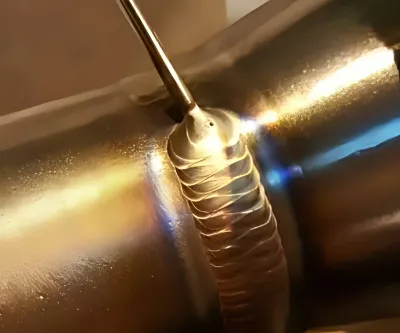
Welding Gr2 titanium plates is a critical step in the fabrication process and must be done under strictly controlled conditions. The most important factors are listed below:
a. Welding Method:
Gas Tungsten Arc Welding (GTAW) is recommended. You must use argon shielding gas that is at least 99.995% pure.
b. Filler Material:
For Gr2 welding wire, the material must be pure titanium and match the base material.
c. Shielding Protection:
A shield must be used behind the welding torch to protect it. At the same time, the backside of the weld seam should be protected with argon gas. The area where the weld is done must not be exposed to air until the temperature is below 200°C.
d. Welding Current:
For plates that are 0.8 mm thick, use the following: 40–60 A
For plates that are 1.5 mm thick made of titanium: The range is from 70 to 100 A.
e. Heat Input Control:
The maximum heat input is 15 kJ/cm. This will prevent the equipment from overheating. Overheating can cause the grain to become coarser and the mechanical properties to weaken.
2. Application Forms:
Railing tubes: Wall thickness of 1.0–1.5 mm, formed by tube bending. Surface finish can be brushed or polished as required.
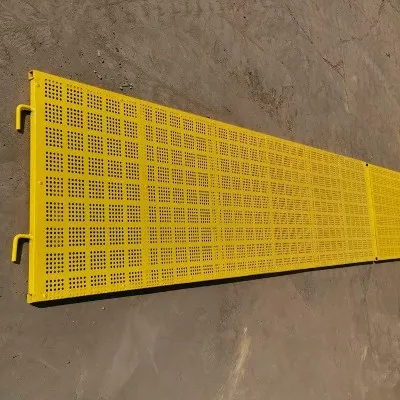
Splash panels: The thickness of the material is between 0.6 and 1.0 millimeters. It is installed on top of the bridge-side barrier to effectively block salt-laden spray.
Fasteners: To prevent galvanic corrosion resulting from contact with dissimilar metals, it is recommended to utilize titanium or matching-material fasteners.
Benchmark Case:
The Miyakojima Strait Bridge in Japan. The guardrails and maintenance passages are made of titanium, which does not rust. This is the best material for the longest suspension bridge in the world.
The Delta Project in the Netherlands: Some of the gates and protective structures are coated with titanium and made of titanium plates to withstand the harsh marine environment of the North Sea.
3.Life Cycle Cost Analysis
This is the most compelling competitive advantage of Gr2 titanium plates in the construction industry. Although the initial material cost is relatively high (about 3-5 times that of 304 stainless steel and 10-15 times that of galvanized steel), when considering the entire life cycle, the economic performance is often superior to that of conventional materials.
Take the coastal bridge guardrail as an example. A cost comparison based on a 50-year service life:
| Item | Carbon Steel Railing (Hot-Dip Galvanized) | 304 Stainless Steel Railing |
Gr2 Titanium |
| Initial Material & Installation Cost (CNY/m²) | 300–500 | 800–1200 | 2000–3000 |
| Maintenance Frequency | Repainting every 5–7 years | Inspection every 10–15 years, with partial spot repairs |
No maintenance required |
| Total Maintenance Cost over 50 Years (CNY/m²) | 1500–2500 | 300–600 | 0 |
| Total Cost over 50 Years (CNY/m²) | 1800–3000 | 1100–1800 | 2000–3000 |
| Condition after 50 years | Needs complete replacement | There might be pitting corrosion | Basically in good condition |
Key conclusion:
When the service life exceeds 30 years, the total cost of Gr2 titanium plates begins to be lower than the carbon steel + regular maintenance scheme.
When the service life exceeds 50 years, the total cost of Gr2 titanium plates is basically the same as or slightly lower than that of the 304 stainless steel scheme.
In projects where the value of maintenance-free is highly valued (such as high-altitude, underwater, and remote areas), the economic advantage of titanium plates becomes more prominent.
4.1 Five Key Considerations In The Design Phase
Avoid Contact Between Different Types Of Metals:
When Titanium Comes Into Contact With Carbon Steel, Stainless Steel, Copper, Aluminum And Other Metals In A Humid Environment, Electrochemical Corrosion Is Likely To Occur. The Connection Points Should Be Isolated Using Insulating Gaskets Or By Using Fasteners Of The Same Material.
Considering The Thermal Expansion Difference:
When The Titanium Plate Is Connected To The Steel Structure, Long Round Holes Or Sliding Supports Should Be Set To Release The Stress Caused By The Thermal Expansion Difference Between The Two Materials.
Controlling The Size Of The Sheet Materials:
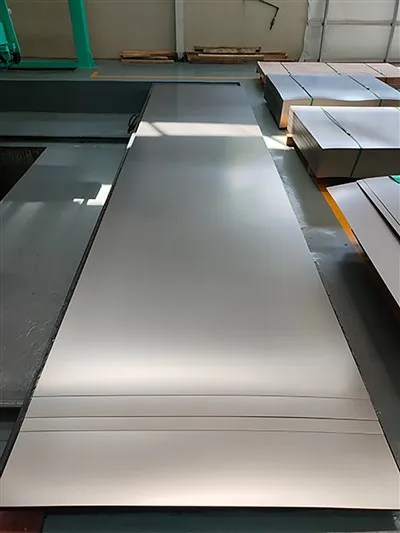
The Size Of Each Titanium Sheet Needs To Take Into Account Both The Subsequent Processing And Transportation Conditions. Generally, It Is Recommended That The Width Should Not Exceed 1500mm And The Length Should Not Exceed 6000mm.

Key control points during the construction phase:
| Process | Key Control Points | Common Issues & Solutions |
| Storage of Plates | Keep the plates flat, dry, and clean. Avoid direct contact with steel tools | Heat accumulation leads to deformation: Ensure proper cooling and avoid high-speed friction |
| Cutting | Band saw or circular saw cutting is recommended, with low cutting speed (approx. 20–30 m/min) | Heat buildup causing deformation → Ensure sufficient cooling and avoid high-speed friction |
| Bending/Forming | Minimum bending radius should be about 2–3 times the plate thickness (Gr2 performs better than Gr4) | Excessive springback → Consider an overbend allowance of 1.5–2° in die design |
| Welding | Argon shielding must be maintained until the temperature drops below 200°C | Weld discoloration due to oxidation → Remove with a stainless steel brush or reapply proper shielding during welding |
| Installation / Fastening | Use stainless steel or titanium fasteners, with insulating gaskets where required |
Galvanic corrosion → Avoid the use of galvanized or copper fasteners |


