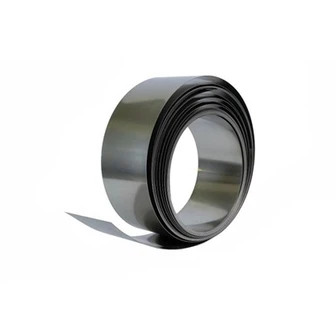
Century-Long Roofing: Add Pure Titanium Plates for Unmatched Durability
Titanium roof panels have developed a complete technical system in Japan, with a cumulative application area exceeding 500,000 square meters. Compared with traditional copper plates (with a lifespan of approximately 50-80 years) and galvanized steel plates (20-30 years), the design lifespan of titanium roof panels can reach over 100 years, and no coating maintenance is required throughout their entire life cycle.
1. Detailed Explanation of System Structure:
A typical titanium plate vertical lap-edge roof system consists of the following layers from the outside to the inside:
Titanium panel layer: A 0.4 - 0.6mm thick Gr2 titanium plate, with longitudinal ribs formed by mechanical pressing. Adjacent panels are mechanically bonded together by a locking machine without the need for penetration fixation.


Waterproof layer: Usually made of PVC or TPO waterproof sheet, with a thickness of 1.2 - 1.5mm, serving as the second line of defense against water leakage.
Insulation layer: Rock wool or polyurethane boards, with the thickness determined according to local energy-saving regulations (typically 50 - 150mm).
Vapor barrier layer: Prevents indoor moisture from entering the insulation layer.
Profiled steel sheet base plate: Supports the loads of all the layers above.
Roof trusses: Main structural supports
2. Key Technical Details - Temperature Deformation Control
Titanium materials will undergo slight but significant deformation when subjected to temperature changes. Therefore, titanium roofing systems must be designed with appropriate sliding supports and expansion joints:
A.Sliding supports allow the titanium panels to expand and contract freely along their length; typically, one is installed every 1.5–2.0 meters.
B.The spacing between expansion joints should not exceed 40 meters, and the joint width should be determined based on calculations of the local extreme temperature difference.
3.Benchmark Case:
Sensoji Main Hall (Tokyo, Japan): The roof section was renovated using titanium plates instead of traditional copper tiles. Approximately 15 tons of titanium were used, mainly for roof coverage and joint components. Compared to the original copper roof, titanium is almost not corroded in the long-term acid rain and urban pollution environment, significantly reducing the need for later maintenance.

4.Market Prospects and Trends
4.1 Global Market Size of Titanium Sheets for Construction
China's market growth: In recent years, China has gradually introduced titanium roofing systems in large public buildings (such as museums, convention centers). The titanium industrial base represented by Baoji has promoted the domestic production of titanium materials for buildings, and the market demand is currently in the initial growth stage.
North American market application trend: In the United States and Canada, titanium plates for construction are mainly used in landmark buildings and green building projects. Driven by LEED certification, titanium materials have gradually gained attention due to their recyclability and extremely long lifespan. However, the overall usage is still lower than that in the Japanese and European markets.
4.2 Other Architectural Application Scenarios
| Application | Thickness | Technical points | Typical projects |
| Interior decorative wall panels | 0.3-0.5mm | Surface can be treated by etching, embossing, or brushing to enhance texture | High-end hotels, airport VIP lounges |
|
Canopies / eaves |
0.5-0.8mm | Technical points: Drainage slope (≥3%) and drip edge design should be considered | Entrances of commercial complexes |
| Landscape sculptures | 1.0-2.0mm | Complex curved | Public art installations |
| Underground structural waterproof panels | 0.4-0.6mm |
Weld seams must undergo penetration testing; lap width ≥50 mm |
Subways, tunnels |