

What is the difference between forging and stamping?
Forging and stamping are two significant manufacturing processes in the metalworking industry, each with its own unique characteristics, advantages, and applications. As a forging and stamping supplier, I have witnessed firsthand the distinct roles these processes play in creating high - quality metal products. In this blog, I will delve into the differences between forging and stamping to help you better understand which process is most suitable for your specific needs.
1. Basic Definitions and Principles
Forging
Forging is a manufacturing process that involves shaping metal by applying compressive forces using a hammer, press, or other forging equipment. The metal is heated to a malleable temperature, typically well above its recrystallization temperature, which allows it to be deformed without cracking. This process can be done using open - die forging, where the metal is placed between two flat or simple - shaped dies, or closed - die forging, where the metal is completely enclosed within a die cavity during the forging operation.
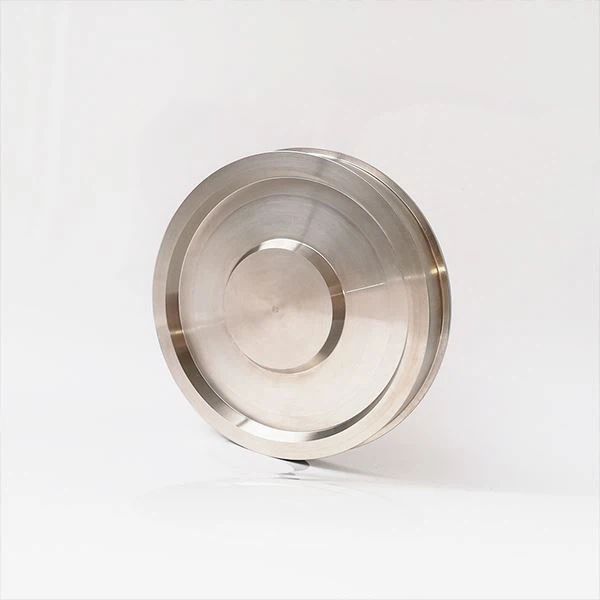
The principle behind forging is to improve the mechanical properties of the metal. By deforming the metal under high pressure, the grain structure of the metal is refined, which results in increased strength, toughness, and fatigue resistance. For example, in the production of Titanium Forged Disc, forging helps to ensure that the disc can withstand high - stress applications, such as in aerospace engines or high - performance machinery.
Stamping
Stamping, on the other hand, is a process of cutting, bending, or forming sheet metal using a stamping press and a set of dies. The sheet metal is placed between the dies, and the press applies a force to shape the metal according to the design of the dies. Stamping can be used for a wide range of operations, including blanking (cutting out a flat piece of metal), punching (creating holes in the metal), bending, and deep drawing (forming a three - dimensional shape from a flat sheet).
The principle of stamping is based on the plastic deformation of sheet metal at room temperature or slightly elevated temperatures. It is a high - speed and cost - effective process for mass - producing parts with consistent dimensions. For instance, in the automotive industry, stamping is widely used to produce body panels, brackets, and other components in large quantities.
2. Material Considerations
Forging
Forging can be applied to a wide variety of metals, including steel, aluminum, titanium, and copper alloys. However, the choice of metal for forging depends on the specific requirements of the final product. For example, titanium is a popular choice for high - performance applications due to its high strength - to - weight ratio, corrosion resistance, and ability to withstand high temperatures. Our Gr2 Titanium Forged Flange is made from Grade 2 titanium, which offers excellent corrosion resistance and good formability during the forging process.

The forging process can also handle large and thick pieces of metal. This is because the high - temperature and high - pressure environment in forging allows the metal to be deformed uniformly throughout its cross - section. However, forging of some high - alloy metals can be challenging due to their low ductility at high temperatures, which requires careful control of the forging parameters.
Stamping
Stamping is mainly used for sheet metals, such as steel sheets, aluminum sheets, and stainless steel sheets. The thickness of the sheet metal used in stamping typically ranges from a few millimeters to several centimeters, depending on the capabilities of the stamping press and the complexity of the part.
The formability of the sheet metal is a crucial factor in stamping. Metals with good ductility, such as aluminum and low - carbon steel, are more suitable for stamping operations because they can be bent and formed without cracking. For example, high - purity titanium sheets can be used in stamping to produce High Purity Titanium Sputtering Target, where the thin and flat shape of the target can be achieved through stamping processes.
3. Process Capabilities
Forging
Forging is capable of producing parts with complex three - dimensional shapes, especially when using closed - die forging. The dies can be designed to create intricate details and contours on the forged part. For example, in the production of turbine blades for aircraft engines, forging can create the aerodynamic shape and internal structure required for optimal performance.
Forging also allows for the production of parts with high precision. Although the initial setup of the forging dies may be time - consuming and expensive, once the dies are in place, the forging process can produce parts with tight tolerances. This makes forging suitable for applications where high precision and reliability are essential, such as in the medical and aerospace industries.
Stamping
Stamping is highly efficient for mass - producing simple to moderately complex flat or shallow - drawn parts. The stamping press can operate at high speeds, producing hundreds or even thousands of parts per hour. This makes it ideal for industries that require large - volume production, such as the automotive and electronics industries.
However, the complexity of the shapes that can be achieved through stamping is limited compared to forging. Deep - drawn parts with very high aspect ratios or parts with complex internal features may be difficult to produce using stamping alone. Additionally, the precision of stamping is generally lower than that of forging, especially for parts with tight dimensional tolerances.
4. Surface Finish and Quality
Forging
Forged parts typically have a rough surface finish due to the high - pressure deformation process. After forging, additional machining operations are usually required to achieve the desired surface finish and dimensional accuracy. However, the internal quality of forged parts is generally very high. The refined grain structure and the absence of internal defects, such as porosity and inclusions, make forged parts more reliable and durable.
Stamping
Stamped parts can have a relatively smooth surface finish, especially when using high - quality dies and proper lubrication. The surface finish of stamped parts can be further improved through processes such as polishing and coating. However, stamping can sometimes introduce surface defects, such as scratches, dents, or wrinkling, especially when the sheet metal is not properly supported during the stamping operation.
5. Cost Considerations
Forging
The initial cost of forging is relatively high. This is because the forging equipment, such as forging presses and dies, is expensive to purchase and maintain. The setup time for forging dies is also long, which adds to the overall cost of production. However, for small - to - medium - volume production of high - strength and high - precision parts, forging can be cost - effective in the long run due to the superior quality and performance of the forged parts.
Stamping
Stamping has a lower initial setup cost compared to forging. The stamping dies are generally less expensive to manufacture, and the setup time is shorter. Additionally, the high - speed production capability of stamping makes it very cost - effective for mass - producing parts. However, for low - volume production, the cost per part may be relatively high due to the fixed cost of die manufacturing.
6. Applications
Forging
Forging is widely used in industries where high - strength and high - reliability parts are required. Some common applications of forging include:
- Aerospace: Forged parts are used in aircraft engines, landing gears, and structural components due to their high strength - to - weight ratio and fatigue resistance.
- Automotive: Forged crankshafts, connecting rods, and steering knuckles are used in high - performance vehicles to improve engine performance and safety.
- Energy: Forged parts are used in power generation equipment, such as turbines and generators, to withstand high - temperature and high - pressure conditions.
Stamping
Stamping is commonly used in the following industries:
- Automotive: Stamped parts are used for body panels, brackets, and interior components due to their cost - effectiveness and mass - production capabilities.
- Electronics: Stamped parts are used in the production of electronic enclosures, connectors, and heat sinks.
- Appliances: Stamped parts are used in the manufacturing of household appliances, such as refrigerators, washing machines, and ovens.
Conclusion
In conclusion, forging and stamping are two distinct manufacturing processes with their own advantages and limitations. Forging is suitable for producing high - strength, high - precision parts with complex shapes, especially for small - to - medium - volume production. Stamping, on the other hand, is ideal for mass - producing simple to moderately complex flat or shallow - drawn parts at a low cost.
As a forging and stamping supplier, we have the expertise and capabilities to provide high - quality products using both processes. Whether you need a Titanium Forged Disc for aerospace applications or a High Purity Titanium Sputtering Target for electronics manufacturing, we can offer customized solutions to meet your specific requirements.
If you are interested in our forging and stamping products, please feel free to contact us for a detailed discussion about your project. We are committed to providing you with the best products and services to help you achieve your goals.
References
- "Metal Forming: Processes and Applications" by George E. Dieter
- "Manufacturing Engineering and Technology" by Serope Kalpakjian and Steven R. Schmid