

What are the purposes of heat treatment for forged and stamped parts?
Heat treatment is a critical process in the manufacturing of forged and stamped parts, playing a pivotal role in enhancing their mechanical properties, durability, and overall performance. As a forging and stamping supplier, I've witnessed firsthand the transformative power of heat treatment and its significance in meeting the diverse needs of our customers. In this blog post, I'll delve into the purposes of heat treatment for forged and stamped parts, exploring how it contributes to the quality and functionality of these components.
Enhancing Mechanical Properties
One of the primary purposes of heat treatment is to improve the mechanical properties of forged and stamped parts. Through controlled heating and cooling processes, we can alter the microstructure of the metal, thereby enhancing its strength, hardness, toughness, and ductility. For example, quenching and tempering are common heat treatment methods used to increase the hardness and strength of steel parts. By rapidly cooling the heated metal in a quenching medium, such as oil or water, we can form a martensitic structure, which is extremely hard but brittle. Subsequent tempering at a lower temperature helps to relieve internal stresses and improve the toughness of the material, resulting in a balanced combination of strength and ductility.

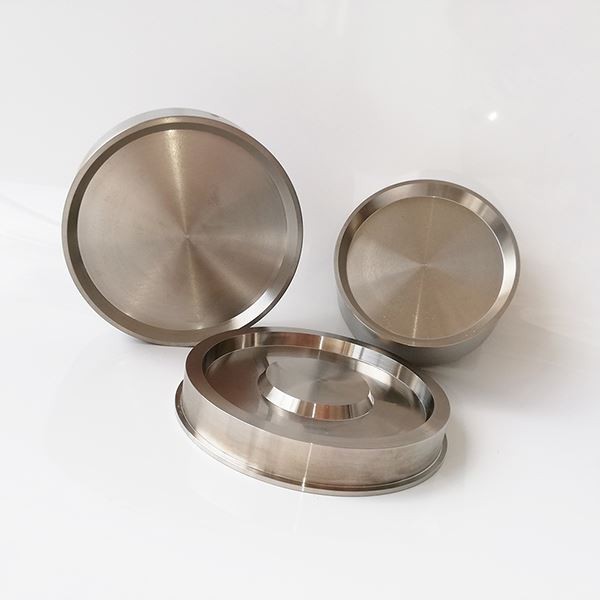
In addition to hardness and strength, heat treatment can also improve the fatigue resistance of forged and stamped parts. Fatigue failure is a common problem in components subjected to cyclic loading, such as automotive engine parts and aerospace components. By carefully controlling the heat treatment process, we can refine the grain structure of the metal, reduce the presence of defects, and improve the material's ability to withstand repeated stress cycles. This not only extends the service life of the parts but also enhances their reliability and safety.
Improving Machinability
Another important purpose of heat treatment is to improve the machinability of forged and stamped parts. Machinability refers to the ease with which a material can be cut, shaped, and finished using machining processes such as turning, milling, and drilling. Some metals, such as stainless steel and titanium, can be difficult to machine due to their high strength and hardness. Heat treatment can be used to soften these materials, making them more amenable to machining operations.
For example, annealing is a heat treatment process that involves heating the metal to a specific temperature and then slowly cooling it to relieve internal stresses and reduce hardness. This can improve the machinability of the material by making it easier to cut and shape. In some cases, heat treatment can also be used to improve the surface finish of the parts, reducing the need for additional finishing operations.
Achieving Dimensional Stability
Dimensional stability is a crucial factor in the manufacturing of forged and stamped parts, especially those with tight tolerances. Heat treatment can help to achieve dimensional stability by reducing internal stresses and minimizing the risk of distortion during subsequent machining and assembly operations. When a metal is forged or stamped, it undergoes significant plastic deformation, which can introduce internal stresses into the material. These stresses can cause the parts to warp or distort over time, leading to dimensional inaccuracies and poor fit.
Heat treatment processes such as stress relieving and normalizing can be used to relieve these internal stresses and improve the dimensional stability of the parts. Stress relieving involves heating the metal to a relatively low temperature and holding it there for a specific period of time to allow the internal stresses to relax. Normalizing, on the other hand, involves heating the metal to a higher temperature and then air-cooling it to refine the grain structure and improve the mechanical properties. Both processes can help to ensure that the parts maintain their shape and dimensions throughout their service life.
Meeting Specific Application Requirements
Different applications require different properties from forged and stamped parts. Heat treatment can be tailored to meet the specific requirements of each application, ensuring that the parts perform optimally under the given conditions. For example, in the aerospace industry, where weight reduction is a critical factor, heat treatment can be used to improve the strength-to-weight ratio of titanium parts. Titanium is a lightweight and high-strength metal, but its mechanical properties can be further enhanced through heat treatment.
In the automotive industry, heat treatment is used to improve the wear resistance and corrosion resistance of engine parts. By applying a hardening treatment to the surface of the parts, we can increase their resistance to abrasion and reduce the risk of corrosion, extending their service life and improving the performance of the engine. Similarly, in the medical industry, heat treatment can be used to sterilize and improve the biocompatibility of titanium implants, ensuring their safety and effectiveness in the human body.
Our Products and Services
As a forging and stamping supplier, we offer a wide range of high-quality forged and stamped parts, including High Purity Titanium Sputtering Target, Pure Titanium Crucible, and Titanium Round Target. Our parts are manufactured using state-of-the-art equipment and advanced heat treatment processes to ensure superior quality and performance.
We have a team of experienced engineers and technicians who are dedicated to providing customized solutions to meet the specific needs of our customers. Whether you need a small batch of prototype parts or a large-scale production run, we can work with you to develop the best heat treatment process for your application. Our commitment to quality and customer satisfaction has earned us a reputation as a reliable and trusted supplier in the industry.
Contact Us for Procurement and Negotiation
If you're interested in our forged and stamped parts or have any questions about heat treatment, please don't hesitate to contact us. We're always happy to discuss your requirements and provide you with a competitive quote. Our sales team is available to assist you with the procurement process and ensure that you receive the best products and services at the most competitive prices.
References
- ASM Handbook, Volume 4: Heat Treating, ASM International, 1991.
- Metals Handbook: Properties and Selection: Irons, Steels, and High-Performance Alloys, ASM International, 1990.
- Heat Treatment Principles and Techniques, George E. Totten, D. Scott MacKenzie, and J. Liang, CRC Press, 2006.