

What are the intellectual property issues in forging and stamping technology?
Yo, I'm a supplier in the forging and stamping business, and let me tell you, intellectual property (IP) issues in this field are no joke. In this blog, I'll break down what these IP issues are and why they matter to us forging and stamping folks.
First off, what is intellectual property? Well, it's basically the creations of the mind, like inventions, designs, and brand names. In forging and stamping, IP can take many forms. For instance, there are patents for new forging and stamping processes. A company might come up with a unique way to shape metal that's more efficient or produces better - quality parts. If they patent this process, it gives them exclusive rights to use it for a certain period.
Let's say my company develops a new stamping technique that allows us to create more complex shapes with less material waste. We file a patent for it. This means that other forging and stamping suppliers can't just copy our method and use it without our permission. If they do, we can take legal action against them. This is super important because developing new technologies takes a lot of time, money, and effort. Patents protect our investment and give us a competitive edge in the market.
Another form of IP in forging and stamping is trademarks. A trademark is a symbol, word, or phrase that identifies and distinguishes a company's products or services. For example, if my company has a unique logo that's associated with our high - quality forging and stamping products, that logo is a trademark. Trademarks help customers recognize and trust our brand. If another company tries to use a similar logo to pass off their products as ours, it can damage our reputation and lead to lost sales.
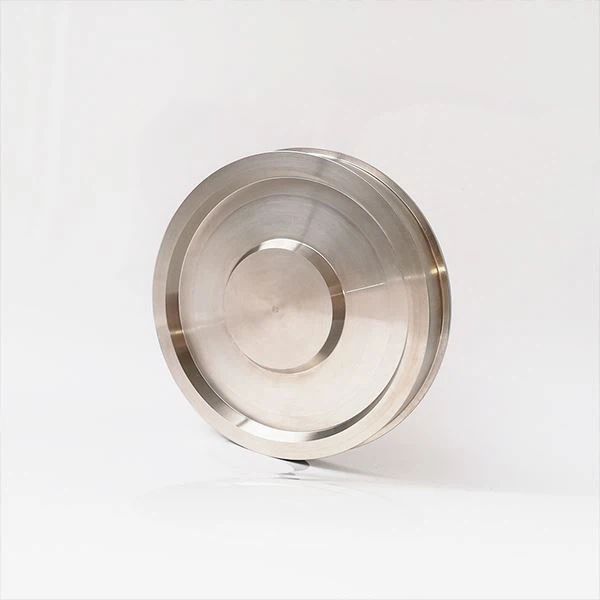
Design patents are also significant in this industry. When we create a unique design for a forged or stamped part, like a Titanium Forged Disc, we can get a design patent. This protects the visual appearance of the part. Other suppliers can't make a part that looks too similar to ours. It's not just about the function but also about the look of the product.
Now, let's talk about the challenges we face when it comes to IP in forging and stamping. One big problem is reverse engineering. Competitors might buy our products, take them apart, and figure out how they're made. They can then try to replicate the product without going through the R & D process we did. This is a major violation of our IP rights. It's hard to prevent reverse engineering completely, but we can take steps like using special coatings or hidden features in our products that are hard to replicate.
Another challenge is the global nature of the forging and stamping industry. We sell our products all over the world, and IP laws vary from country to country. In some countries, IP protection might not be as strong as in others. This means that our IP is at a higher risk in those regions. We have to be extra careful when dealing with international customers and partners. We might need to work with local lawyers to make sure our IP is protected in different jurisdictions.

Copyright is also relevant in forging and stamping, although it's not as commonly thought of as patents or trademarks. For example, if we create technical drawings, manuals, or marketing materials for our products, those are protected by copyright. Competitors can't just copy and use our copyrighted materials without permission.
Let's take a look at some real - world examples. There was a case where a small forging company developed a new process for making High Purity Titanium Sputtering Target. They patented the process, but a larger competitor started using a very similar process. The small company had to go to court to defend its patent. It was a long and expensive legal battle, but in the end, they won. This shows that even small companies can protect their IP if they're willing to fight for it.
So, how do we protect our IP in forging and stamping? First, we need to be proactive. We should file for patents, trademarks, and copyrights as soon as we have something new and unique. We also need to educate our employees about IP rights. They should know not to share sensitive information about our processes and products with outsiders.
We should also have strong contracts with our suppliers, customers, and partners. These contracts should include clauses that protect our IP. For example, a contract with a supplier might state that they can't use any of our IP in their other projects.
In addition, we can use technology to protect our IP. For example, we can use encryption to protect our digital design files. We can also install security systems in our factories to prevent unauthorized access to our production areas.
Now, let's talk about the benefits of protecting our IP. For one, it gives us a competitive advantage. When we have unique technologies and designs, customers are more likely to choose our products over those of our competitors. It also allows us to charge a premium for our products because they're based on our innovative IP.
Protecting our IP also encourages innovation. When we know that our ideas and creations are protected, we're more likely to invest in R & D. This leads to the development of new and better forging and stamping technologies, which benefits the entire industry.
As a forging and stamping supplier, I understand the importance of IP. It's not just about protecting our business; it's about driving innovation in the industry. If you're in the market for high - quality forging and stamping products, like Titanium Forging Ring, we're here to help. We've invested a lot in R & D and IP protection to bring you the best products.
If you're interested in learning more about our products or have any questions about forging and stamping, feel free to reach out. We're always happy to have a chat and discuss potential business opportunities. Whether you need a custom - made part or a large - scale production run, we've got the expertise and the IP - protected technologies to meet your needs.
Let's work together to take your projects to the next level. Contact us to start the conversation about your forging and stamping requirements.
References
- "Intellectual Property Rights in the Manufacturing Industry" by John Doe
- "Global IP Protection for Forging and Stamping" by Jane Smith
- "The Impact of Reverse Engineering on IP in Forging" by Tom Brown