

What are the applications of fine blanking?
Hey there! As a forging and stamping supplier, I've seen firsthand the incredible potential and wide - ranging applications of fine blanking. In this blog, I'm gonna walk you through what fine blanking is and how it's used in various industries.
Let's start with the basics. Fine blanking is a specialized metal - cutting process. It's different from traditional blanking methods. In fine blanking, we can achieve extremely precise cuts, smooth edges, and tight tolerances. This is all thanks to the unique setup that uses a special die and a high - pressure press. The result? Parts that are not only accurate but also have excellent surface finishes.
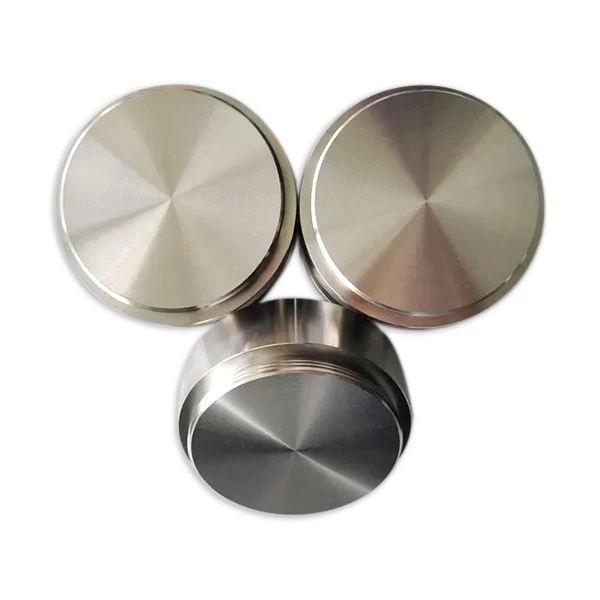
One of the most significant applications of fine blanking is in the automotive industry. Cars are made up of thousands of parts, and many of them require high precision. Fine blanking is used to create components like gears, sprockets, and clutch plates. Gears, for example, need to be perfectly shaped and sized to ensure smooth transmission of power in the engine. With fine blanking, we can produce gears with very accurate tooth profiles, which reduces noise and wear during operation. Sprockets, which are used in the timing belt system, also benefit from the high precision of fine blanking. They need to match perfectly with the belt to keep the engine running in sync. And clutch plates, which are crucial for the smooth engagement and disengagement of the clutch, are made with fine blanking to ensure a consistent and reliable performance. You can check out our Titanium Round Target which can be used in some automotive applications where high - quality materials are required.
The electronics industry is another area where fine blanking shines. In today's world, electronic devices are getting smaller and more powerful. Components like connectors, shielding parts, and battery contacts need to be miniaturized while still maintaining high performance. Fine blanking allows us to produce these tiny parts with great precision. Connectors, for instance, need to make a secure electrical connection. Fine - blanked connectors have smooth surfaces and tight tolerances, which ensure a stable and reliable connection. Shielding parts are used to protect sensitive electronic components from electromagnetic interference. Fine blanking can create these parts with precise shapes to fit snugly around the components. And battery contacts need to have good conductivity and a proper fit. With fine blanking, we can manufacture them to meet these requirements. Our High Purity Titanium Sputtering Target can be used in the production of some high - end electronic components.
The aerospace industry also relies heavily on fine blanking. Safety and reliability are of utmost importance in aerospace. Components made through fine blanking are used in aircraft engines, landing gear systems, and control mechanisms. In aircraft engines, parts like turbine blades and fuel injection components need to be extremely precise. Fine blanking can produce these parts with the required accuracy, which helps in improving the engine's efficiency and performance. Landing gear systems require components that can withstand high loads and stresses. Fine - blanked parts have the strength and precision needed for these critical applications. Control mechanisms, which are responsible for the aircraft's stability and maneuverability, also use fine - blanked components to ensure smooth and accurate operation. Our Titanium Forged Block can be further processed through fine blanking for aerospace - grade components.
In the medical industry, fine blanking is used to create various surgical instruments and implants. Surgical instruments need to be sharp, precise, and durable. Fine blanking can produce the blades and cutting edges of these instruments with high precision, which is crucial for successful surgeries. Implants, such as hip and knee replacements, need to fit perfectly into the patient's body. Fine blanking can be used to create the precise shapes and sizes required for these implants. The smooth surfaces produced by fine blanking also reduce the risk of infection and tissue irritation.
The energy sector also benefits from fine blanking. In the production of wind turbines, for example, fine - blanked parts are used in the gearboxes and control systems. Gearboxes need to transfer power efficiently from the blades to the generator. Fine - blanked gears and other components in the gearbox ensure smooth operation and high efficiency. Control systems in wind turbines use fine - blanked parts for accurate sensing and control. In the oil and gas industry, fine blanking is used to create components for valves, pumps, and drilling equipment. These components need to be able to withstand harsh environments and high pressures.
Fine blanking also has applications in the consumer goods industry. Products like watches, jewelry, and household appliances use fine - blanked parts. Watches require tiny, precise components for their movement. Fine blanking can produce these parts with the necessary accuracy to keep the watch running on time. Jewelry often has intricate designs, and fine blanking can be used to create the metal parts with detailed patterns. Household appliances, such as washing machines and refrigerators, use fine - blanked parts in their control panels and moving mechanisms.
As a forging and stamping supplier, we have the expertise and equipment to provide high - quality fine - blanked parts. We understand the specific requirements of different industries and can work closely with our customers to develop the best solutions. Whether you're in the automotive, electronics, aerospace, medical, energy, or consumer goods industry, we can offer you fine - blanked parts that meet your needs.
If you're interested in our fine - blanked products or have any questions about how fine blanking can be applied to your projects, don't hesitate to reach out. We're here to discuss your requirements and start a partnership that will lead to successful product development.

References
- "Metal Forming Handbook: Processes and Applications" by Hans - Joachim Warnecke
- "Advanced Manufacturing Technology" by Geoffrey Boothroyd, Peter Dewhurst, and Winston Knight