Titanium, Not Just A Metal
While most immediately think of solid titanium in high-performance sports equipment or large armor plating, its powdered form, known as sponge titanium, comprises the basis of the entire titanium industry.
Sponge titanium, used to produce titanium ingots, is transformed into slab, billet, pipe, bar, plate, sheet, and other mill products. This highly volatile form of pure titanium is also used to create beautiful flashes of white light in fireworks.
Titanium dioxide (TiO2) delivers exceptional whiteness to a wide variety of household goods and foods. Its three qualities make it ideal for creating whiter whites-it is white, safe for human consumption, and scatters light extremely well.
"Titanium dioxide has properties for whiteness, opacity, and chemical inertness that make it especially suitable for use as a pigment to impart a durable white color to paints, paper, plastic, sunscreen, toothpaste, and wallboard," the USGS wrote in its 2018 titanium report.
Most high-quality white paints available today contain "titanium white," a pigment made from titanium dioxide. In addition to imparting a reflectiveness and whiteness that makes rooms appear brighter, titanium dioxide increases paint's opacity, assisting in the "one-coat cover" touted by many manufacturers.
It is also used to make foods such as skim milk and cottage cheese whiter and creamier looking, and even to enhance the whiteness of paper.
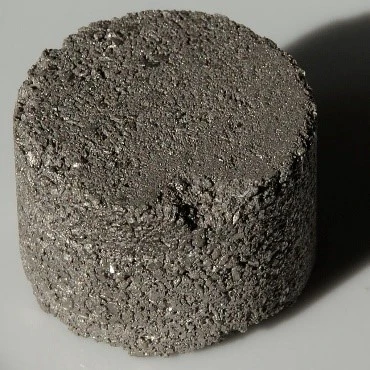
Wikimedia Commons
A puck of titanium sponge, the porous form of titanium created during the initial processing of the ilmenite or rutile, is crucial for producing high-performance aerospace components and consumer goods.