



Titanium Alloy H-type Section Bar
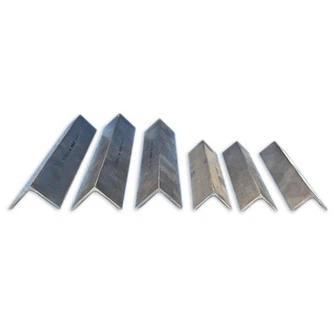
Item: Titanium Alloy H-type Section Bar, H-type profile.
Material: Gr1, Gr2, Gr3, Gr4, Gr5.
Standards: GB/T 706-2016, GB/T37520-2019.
Section shape: H-type section.
MOQ: 500Kgs
Payment: L/C, T/T at sight.
Product Introduction
Description
Section Bars are universal products with a certain geometric shape made from metal with strength and toughness through processes such as rolling, extrusion, and casting. Titanium Alloy H-type Section Bar has a fixed appearance size, a confirmed shape of the cross-section, and good mechanical and physical properties.

Classified by different scenarios, there are railway profiles, shipbuilding profiles (L-shaped steel), structural and architectural profiles (H-shaped steel, I-shaped steel), etc.
Titanium Alloy H-type Section Bar can be used alone or further processed into other products, it is commonly used in building structures and manufacturing installations. In addition to the characteristics of steel profiles, Titanium section bars also have high strength and corrosion resistance. Mechanical engineers can choose the specific shape, material, heat treatment state, mechanical properties, and other parameters according to design requirements, or process or heat treatment to achieve the accuracy requirements of the design. The material, specifications, and dimensions of the section bar can refer to the national standards (GB) respectively.
There are significant differences in cross-sectional shapes. In products, except for square, round, and flat steel sections with simple shapes and small differences, most complex profile products (such as I-type, H-type, Z-type, etc.) have complex cross-sectional shapes. The design and rolling production have their characteristics; The complexity of section shape leads to uneven deformation of various parts of the metal, temperature distribution of the section, and wear of the rolling rolls during the rolling process. Therefore, it is difficult to accurately calculate and control the size of the rolled piece; In addition, individual varieties or specifications of complex cross-section profiles are usually produced in small batches. The above factors make the development of complex cross-section profile continuous rolling technology difficult.
There are many types of rolling mill structures and layout forms, two rolling mills, three-rolling mills, four-roll universal pass rolling mills, etc. In terms of rolling mill layout, there are horizontal rolling mills, sequential rolling mills, chessboard rolling mills, semi-continuous rolling mills, and continuous rolling mills.
Our workshop for the titanium H-type section bar was established in 2021, located at Baoji High-tech Development Zone, Shaanxi Province, with a registered capital of 30 million yuan. Mainly engaged in the research and development, production, and sales of titanium and titanium alloy profiles, nickel and nickel alloy profiles, zirconium and zirconium alloy profiles, and high-temperature alloy profiles, is one of the production bases for non-ferrous metal profiles in China. We have passed and implemented ISO9001:2015 quality management system certification, ISO14001:2005 environmental management system certification, and ISO45001:2018 occupational health and safety management system certification. The workshop covers an area of 7 acres, with a construction area of 15,000 square meters. Through our continuous research and development, more than 50 sets of special equipment for non-ferrous metal profile production have been designed and improved. There are currently 69 employees, with over 50% of them having a bachelor's or above.
Hot Tags: titanium alloy h-type section bar, China titanium alloy h-type section bar manufacturers, suppliers, factory
You Might Also Like




Send Inquiry
