

What to Know About Titanium Forging
The Titanium Forging Process include:
Open Die Forging – Blank titanium material is deformed and pressed into shape in the cavity between two molds. These molds do not completely encapsulate the material but instead provide a narrow gap through which excess material can flow out. When in the cavity, the titanium is repeatedly stamped until the desired shape is achieved.
Closed Die Forging – Also known as impression die forging, this method uses compression under high pressure to shape a heated titanium blank. The blank is covered either in full or in part by the dies, which move toward each other from top to bottom to achieve the required form.
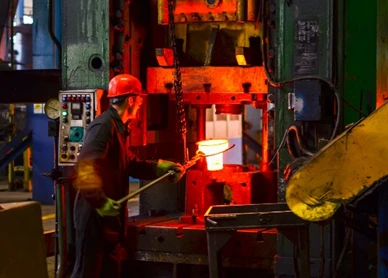
Free Forging – Small and/or simple orders may be accomplished with free forging, a titanium forging method that is performed between two flat dies without an inner cavity. It is a relatively inexpensive and flexible method, but due to high labor requirements, it's not the most common way to forge large amounts of titanium metal.
Isothermal Forging – A process by which the starting material and the die are heated to an equal and highly controlled temperature to achieve high deformation rates with minimal pressure.
Other types of titanium alloy forging, such as multi-direction die forging, extrusion die forging, partial die forging, and rolled ring forging, rely on similarly unique alignments of heat, pressure, and die used to achieve desired shapes.
There are several benefits to titanium alloy forging, including:
High Strength
Corrosion Resistance
Heat Resistance
Biocompatibility
Weldability
When looking for titanium forging companies, ensure that the company you are interested in working with can forge titanium to the specifications you need.
Some of the most common grades include:
6-4: One of the most widely used titanium alloys in forging, 6-4 titanium is particularly popular in aerospace components.
6-2-4-2: Prized for its excellent creep resistance and strength at elevated temperatures, 6-2-4-2 titanium is utilized in components where high heat and stress are present.
6-2-4-6: Similar to 6-2-4-2 titanium, but with improved toughness and ductility.
3-2.5: Known for exceptional weldability and corrosion resistance, 3-2.5 alloy is often used in the medical industry for implants.
In short, titanium forging involves selecting the appropriate titanium alloy grade based on the application's requirements, and then subjecting the billet to a series of forging processes to create high-strength, corrosion-resistant, and heat-resistant components that possess numerous benefits for a variety of industries, depending on the alloy chosen.
Effects of The Forging Temperature
Can you forge titanium at any temperature? Technically, yes; however, the temperature used must be correct for the process and part.
Hot forging is more common than cold forging, though the latter can be cheaper and more environmentally friendly. Notably, lower temperatures (below 1650 degrees Fahrenheit) are only suitable for non-alloyed titanium, while higher temperatures are a requirement for alloyed titanium.
The temperature of the titanium is not the only thing essential during forging. The temperature of the dies must also be controlled since excessive heat loss or variations in heat will lead to defective parts.
Temperature is important in the titanium forging process, primarily related to the metal's structural elements at various heat levels. By forging with the correct heat levels of starting material and dies, the forger can create a more robust and reliable end product-one that is structurally suitable for the job at hand.


