

Technical Innovation of Gr1 Titanium Plate
In recent years, as one of the most widely used and highly performing grades in the titanium family for industrial applications, Gr1 titanium plates are standing at the convergence point of multiple industry transformations, and are experiencing a growth wave driven by technological innovation, green transformation, and emerging demands.
 The industrialization progress of ultra-fine grain and high-performance production technologies has been achieved: Leading titanium material processing enterprises in China, such as Baotie Group and Western Superconducting Materials, have successfully applied the intense plastic deformation technology and advanced controlled rolling and controlled cooling processes on a large scale to the production of Gr1 titanium plates. This has enabled the plates to maintain excellent plasticity and corrosion resistance while increasing their strength by 10-15%, and achieving a more uniform and fine microstructure. This breakthrough directly meets the requirements of the aerospace industry for lightweight, highly reliable fasteners and secondary load-bearing structural components, as well as the demands of high-end chemical equipment for longer service life and higher pressure vessels.
Breakthrough in large-sized and ultra-thin wide-sheet production capabilities: With the advancement of rolling and heat treatment technologies, Gr1 wide titanium sheets with a width exceeding 3 meters and a thickness as thin as 0.3mm have achieved stable mass production. This significantly reduces the welding workload in marine engineering and large chemical container manufacturing, enhances the integrity and safety of the overall equipment, and lowers the comprehensive manufacturing costs.
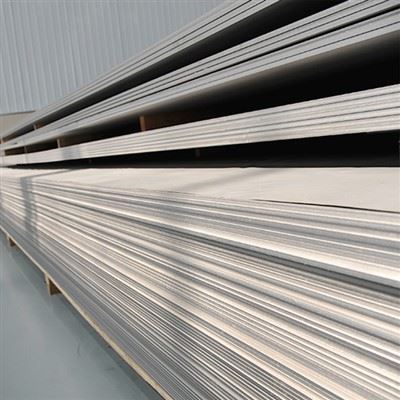
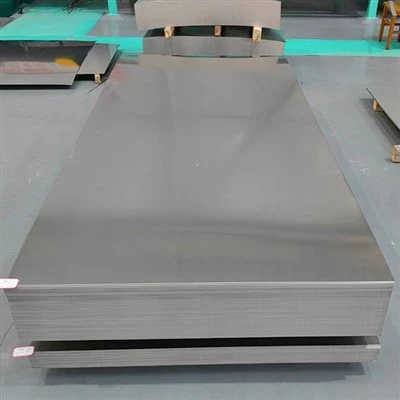
The "green titanium metallurgy" process is accelerating: Under the "dual carbon" target, the carbon emission issue in the production of Gr1 titanium plates has attracted much attention. Leading enterprises in the industry are collaborating with research institutions to test upgraded processes for extracting titanium through electrolysis, and are actively exploring the combination of the short process and low loss characteristics of 3D printing with Gr1 titanium powder for the manufacture of customized complex components. These technologies are expected to reshape the high energy consumption image of titanium material production at its source and attach a deeper "green" label to Gr1 titanium plates.
Market Landscape and Future Challenges
Currently, the global Gr1 titanium plate market exhibits a pattern of "high-end dominance, intense competition in the mid-to-low end". Companies such as Timet from the United States, VSMPO-AVISMA from Russia, Baotai from China, and Western Materials, among others, dominate the high-end markets such as aerospace and new energy. At the same time, a large number of small and medium-sized enterprises are active in the civilian industrial product market.


