

What is the role of dies in forging and stamping?
Forging and stamping are two fundamental manufacturing processes that have been used for centuries to shape metals into various forms. These processes are crucial in industries such as automotive, aerospace, and construction, where precision and strength are of utmost importance. At the heart of these processes are dies, which play a pivotal role in determining the final shape, quality, and efficiency of the forged and stamped products. As a forging and stamping supplier, I have witnessed firsthand the significance of dies in these manufacturing processes, and in this blog post, I will delve into the various roles that dies play in forging and stamping.
The Basics of Forging and Stamping
Before we explore the role of dies, let's briefly understand the forging and stamping processes. Forging is a manufacturing process that involves applying compressive forces to a metal workpiece to shape it into a desired form. This is typically done by heating the metal to a malleable state and then using a hammer, press, or other forging equipment to deform it. Forging can be classified into two main types: open-die forging and closed-die forging. In open-die forging, the metal is placed between two flat or shaped dies, and the force is applied to the metal to deform it. Closed-die forging, on the other hand, involves placing the metal in a die cavity that has the desired shape of the final product, and the force is applied to the metal to fill the cavity.
Stamping, on the other hand, is a process that involves using a die to cut, shape, or form a metal sheet or strip. Stamping can be used to create a wide range of products, including automotive parts, electronic components, and household appliances. The stamping process typically involves several steps, including blanking, piercing, bending, and drawing. Blanking is the process of cutting a flat piece of metal from a larger sheet or strip. Piercing is the process of creating holes in the metal. Bending is the process of deforming the metal to create a curved or angled shape. Drawing is the process of stretching the metal to create a three-dimensional shape.
The Role of Dies in Forging
In forging, dies are used to control the shape and size of the forged product. The die is designed to have a specific shape and size that corresponds to the desired shape and size of the final product. The die is typically made of a high-strength steel or other alloy that can withstand the high pressures and temperatures involved in the forging process.
One of the primary roles of dies in forging is to provide a precise and repeatable shape for the forged product. The die is designed to have a high degree of accuracy and precision, which ensures that each forged product is identical to the others. This is important in industries where precision and consistency are critical, such as aerospace and automotive manufacturing.
Another important role of dies in forging is to control the flow of metal during the forging process. The die is designed to have a specific shape and size that guides the metal flow and ensures that the metal fills the die cavity evenly. This helps to prevent defects such as cracks, voids, and porosity in the forged product.
Dies also play a crucial role in improving the efficiency of the forging process. By using a die, the forging process can be automated, which reduces the need for manual labor and increases the production rate. Additionally, the use of dies can reduce the amount of material waste by ensuring that the metal is used more efficiently.
The Role of Dies in Stamping
In stamping, dies are used to cut, shape, and form the metal sheet or strip. The die is designed to have a specific shape and size that corresponds to the desired shape and size of the final product. The die is typically made of a high-strength steel or other alloy that can withstand the high pressures and forces involved in the stamping process.
One of the primary roles of dies in stamping is to provide a precise and repeatable shape for the stamped product. The die is designed to have a high degree of accuracy and precision, which ensures that each stamped product is identical to the others. This is important in industries where precision and consistency are critical, such as electronics and automotive manufacturing.
Another important role of dies in stamping is to control the cutting and forming process. The die is designed to have a specific cutting edge or forming surface that is optimized for the type of metal being stamped and the desired shape of the final product. This helps to ensure that the cutting and forming process is efficient and produces a high-quality product.
Dies also play a crucial role in improving the efficiency of the stamping process. By using a die, the stamping process can be automated, which reduces the need for manual labor and increases the production rate. Additionally, the use of dies can reduce the amount of material waste by ensuring that the metal is used more efficiently.
Types of Dies Used in Forging and Stamping
There are several types of dies used in forging and stamping, each with its own unique design and function. Some of the most common types of dies used in forging include:
- Open-die forging dies: These dies are used in open-die forging and are typically flat or shaped to provide a general shape for the forged product.
- Closed-die forging dies: These dies are used in closed-die forging and are designed to have a specific shape and size that corresponds to the desired shape and size of the final product.
- Impression dies: These dies are used in closed-die forging and are designed to have a specific impression or pattern on the surface of the die. This impression is transferred to the forged product, creating a decorative or functional feature.
Some of the most common types of dies used in stamping include:
- Blanking dies: These dies are used to cut a flat piece of metal from a larger sheet or strip.
- Piercing dies: These dies are used to create holes in the metal.
- Bending dies: These dies are used to deform the metal to create a curved or angled shape.
- Drawing dies: These dies are used to stretch the metal to create a three-dimensional shape.
Examples of Forged and Stamped Products
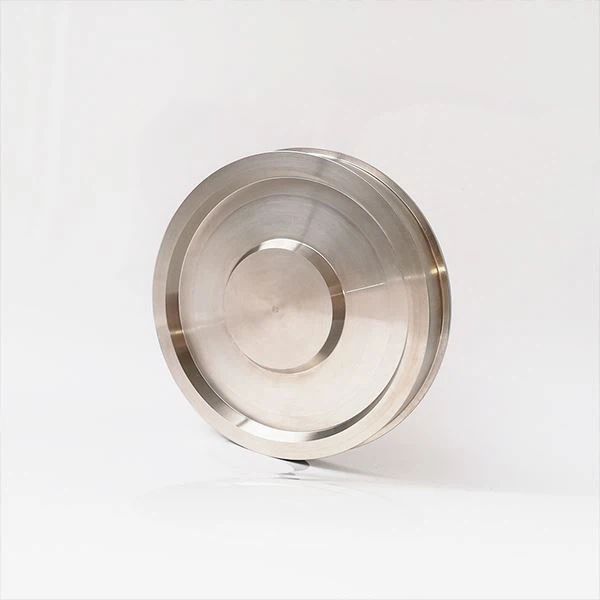
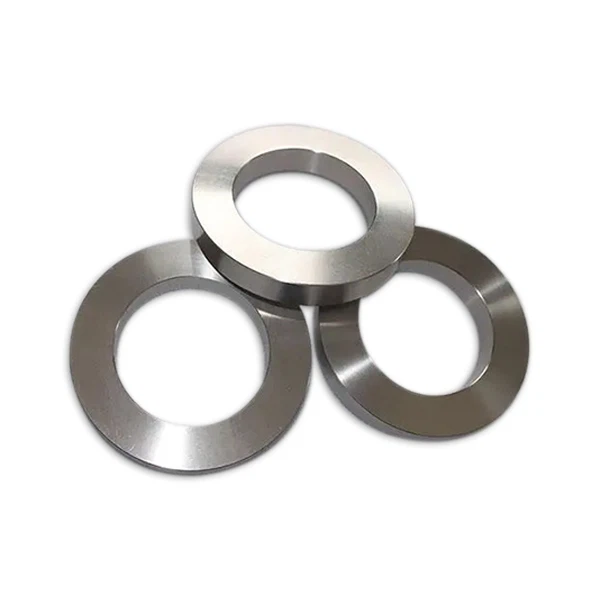
As a forging and stamping supplier, we offer a wide range of forged and stamped products, including Gr2 Titanium Forged Flange, Titanium Forging Ring, and High Purity Titanium Sputtering Target. These products are used in a variety of industries, including aerospace, automotive, and electronics.
The Gr2 Titanium Forged Flange is a high-quality flange that is made from Grade 2 titanium. This flange is designed to provide a reliable and leak-free connection between two pipes or components. The Titanium Forging Ring is a high-strength ring that is made from titanium. This ring is used in a variety of applications, including aerospace and automotive engines. The High Purity Titanium Sputtering Target is a high-purity titanium target that is used in the sputtering process to deposit a thin film of titanium on a substrate. This target is used in a variety of applications, including electronics and semiconductor manufacturing.
Conclusion
In conclusion, dies play a crucial role in forging and stamping processes. They are used to control the shape and size of the forged and stamped products, provide a precise and repeatable shape, control the flow of metal, and improve the efficiency of the manufacturing process. As a forging and stamping supplier, we understand the importance of using high-quality dies to produce high-quality products. If you are in need of forged or stamped products, we invite you to contact us to discuss your requirements and learn more about our products and services.
References
- Kalpakjian, S., & Schmid, S. R. (2009). Manufacturing Engineering and Technology. Pearson Prentice Hall.
- Dieter, G. E. (1988). Mechanical Metallurgy. McGraw-Hill.
- ASM Handbook, Volume 14A: Metalworking: Forging. ASM International.