

What is the precipitation behavior of gr1 titanium plate?
Precipitation behavior refers to the process by which a solid phase separates from a supersaturated solid solution. In the context of Gr1 titanium plates, understanding this behavior is crucial for predicting the material's performance under various conditions. As a reliable supplier of Gr1 titanium plates, we have delved deep into the intricacies of this precipitation behavior to ensure that our products meet the highest standards of quality and performance.
1. Composition and Basic Properties of Gr1 Titanium Plate
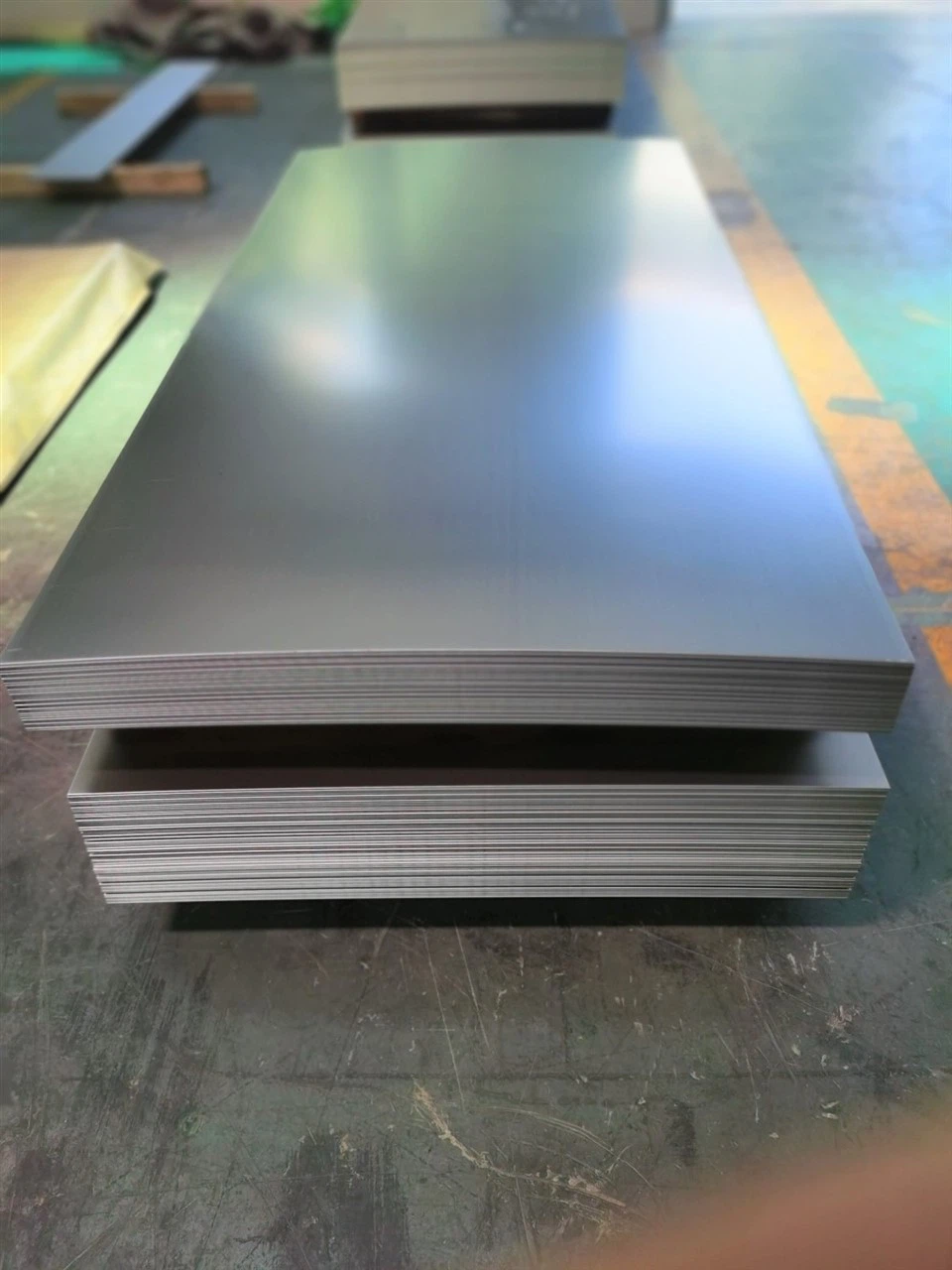
Gr1 titanium is an unalloyed titanium grade, which is mainly composed of titanium with a small amount of impurities. It is known for its excellent corrosion resistance, high ductility, and good weldability. These properties make it a popular choice in many industries, such as aerospace, marine, and chemical processing.
The chemical composition of Gr1 titanium typically includes titanium (Ti) as the major element, with trace amounts of iron (Fe), oxygen (O), carbon (C), nitrogen (N), and hydrogen (H). The purity of titanium in Gr1 is usually above 99%. The low content of alloying elements results in a relatively simple microstructure, which is mainly composed of alpha - phase titanium at room temperature.

2. Factors Affecting the Precipitation Behavior of Gr1 Titanium Plate
2.1 Temperature
Temperature plays a vital role in the precipitation behavior of Gr1 titanium plates. At elevated temperatures, the solubility of impurities and alloying elements in the alpha - phase titanium changes. When the temperature is high enough, some elements that are originally in solid solution may start to form precipitates.
For example, oxygen, which is a common impurity in titanium, has a limited solubility in alpha - titanium. As the temperature decreases, the solubility of oxygen in alpha - titanium also decreases. If the cooling rate is slow, oxygen atoms may diffuse and form titanium oxide precipitates. These precipitates can have a significant impact on the mechanical properties of the titanium plate. High - temperature heat treatment processes, such as annealing, can also influence the precipitation behavior. During annealing, the microstructure of the titanium plate is rearranged, and the precipitation process may be accelerated or inhibited depending on the annealing temperature and time.
2.2 Cooling Rate
The cooling rate after heat treatment is another important factor. A fast cooling rate can suppress the precipitation process because there is not enough time for atoms to diffuse and form precipitates. This can result in a supersaturated solid solution. On the other hand, a slow cooling rate allows atoms to diffuse more freely, promoting the formation of precipitates.
For instance, if a Gr1 titanium plate is quenched rapidly from a high - temperature state, it can retain a metastable supersaturated solid solution. However, if this quenched plate is then subjected to a subsequent aging treatment at a lower temperature, precipitation may occur as the atoms have more time to rearrange and form stable phases.
2.3 Impurity and Alloying Element Content
Although Gr1 titanium is an unalloyed grade, the presence of impurities and trace elements can still affect its precipitation behavior. For example, iron can form intermetallic compounds with titanium under certain conditions. These intermetallic compounds can act as nucleation sites for other precipitates or can directly affect the mechanical and corrosion - resistant properties of the titanium plate.
In addition, nitrogen can also have an impact on precipitation. Nitrogen can form titanium nitride (TiN) precipitates, which are very hard and can increase the hardness of the titanium plate but may also reduce its ductility.
3. Types of Precipitates in Gr1 Titanium Plate
3.1 Titanium Oxide Precipitates
As mentioned earlier, oxygen is a common impurity in titanium. When the solubility of oxygen in alpha - titanium is exceeded, titanium oxide (TiO₂ or Ti₂O₃) precipitates can form. These precipitates are usually small and can be distributed throughout the microstructure. Titanium oxide precipitates can increase the hardness of the titanium plate to some extent but may also reduce its ductility and toughness.
3.2 Intermetallic Compound Precipitates
Intermetallic compounds can form when there are trace amounts of alloying elements or impurities in the titanium plate. For example, iron can react with titanium to form FeTi or Fe₂Ti intermetallic compounds. These intermetallic compounds have different crystal structures and properties compared to the alpha - phase titanium matrix. They can act as strengthening phases, but if the amount is too large, they can also cause brittleness in the titanium plate.
4. Influence of Precipitation on the Properties of Gr1 Titanium Plate
4.1 Mechanical Properties
The presence of precipitates can significantly affect the mechanical properties of Gr1 titanium plates. Precipitates can act as obstacles to dislocation movement, which increases the strength and hardness of the material. However, if the precipitates are too large or too numerous, they can also lead to a decrease in ductility and toughness.
For example, the formation of titanium oxide precipitates can increase the hardness of the titanium plate, but it may also make the plate more brittle. This means that the plate may be more prone to cracking under stress. On the other hand, well - dispersed and fine - sized precipitates can improve the strength - ductility balance of the titanium plate.
4.2 Corrosion Resistance
Precipitates can also influence the corrosion resistance of Gr1 titanium plates. Some precipitates, such as titanium oxide, can form a protective layer on the surface of the titanium plate, which can improve the corrosion resistance. However, if the precipitates are not uniformly distributed or if they are in contact with different phases in the microstructure, they may form galvanic cells, which can accelerate the corrosion process.
For example, if there are intermetallic compound precipitates in contact with the alpha - phase titanium matrix, a potential difference may exist between the two phases. This potential difference can cause an electrochemical reaction, leading to localized corrosion.
5. Applications Related to the Precipitation Behavior of Gr1 Titanium Plate
5.1 Aerospace Industry
In the aerospace industry, Gr1 titanium plates are widely used due to their high strength - to - weight ratio and good corrosion resistance. Understanding the precipitation behavior is crucial for ensuring the safety and reliability of aerospace components. For example, in aircraft engines, the titanium plates may be exposed to high - temperature and high - stress environments. The precipitation of certain phases can affect the creep resistance and fatigue life of the components. By controlling the precipitation behavior through proper heat treatment and processing, the performance of aerospace components can be optimized.
5.2 Chemical Processing Industry
In the chemical processing industry, Gr1 titanium plates are used in equipment such as reactors and heat exchangers. The corrosion resistance of these plates is of utmost importance. The precipitation behavior can affect the formation of a passive film on the surface of the titanium plate, which is responsible for its corrosion resistance. By understanding and controlling the precipitation process, the long - term corrosion resistance of the equipment can be improved.
6. Our Products and Services as a Gr1 Titanium Plate Supplier
As a leading supplier of Gr1 titanium plates, we have a deep understanding of the precipitation behavior and its impact on the properties of the titanium plates. We use advanced manufacturing processes and strict quality control measures to ensure that our products have the desired precipitation characteristics.
We offer a wide range of Gr1 titanium plates with different thicknesses, sizes, and surface finishes to meet the diverse needs of our customers. Our products are not only suitable for the aerospace and chemical processing industries but also for other fields such as marine engineering and medical equipment manufacturing.
In addition to Gr1 titanium plates, we also provide Gr2 Titanium Sheet and Titanium Gr5 Powder. Our Hot Rolling Titanium Plate is also well - received by customers due to its excellent quality and performance.
7. Contact Us for Procurement and Negotiation
If you are interested in our Gr1 titanium plates or other titanium products, we welcome you to contact us for procurement and negotiation. Our professional sales team is ready to provide you with detailed product information, technical support, and competitive pricing. We are committed to providing high - quality products and excellent services to meet your specific requirements. Whether you need a small - quantity order for research purposes or a large - scale procurement for industrial production, we can meet your needs.
References
- "Titanium: A Technical Guide" by John R. Davis
- "Microstructure and Properties of Titanium Alloys" by Y. W. Kim and R. R. Boyer
- "Corrosion of Titanium and Titanium Alloys" by George L. Powell