

What is the density of a pure nickel sheet?
The density of a material is a fundamental physical property that plays a crucial role in various industries, from manufacturing to engineering. When it comes to a pure nickel sheet, understanding its density is essential for accurate design, production, and application. As a supplier of high - quality Pure Nickel Sheet, I am well - versed in the characteristics of pure nickel sheets, and I'm here to share in - depth knowledge about its density.
What is Density?
Before delving into the density of a pure nickel sheet, let's first clarify what density means. Density is defined as the mass of a substance per unit volume. Mathematically, it is expressed as the formula $\rho=\frac{m}{V}$, where $\rho$ represents density, $m$ is mass, and $V$ is volume. The SI unit for density is kilograms per cubic meter ($kg/m^{3}$), but other units such as grams per cubic centimeter ($g/cm^{3}$) are also commonly used.
The Density of Pure Nickel
Pure nickel is a lustrous, silvery - white metal with excellent corrosion resistance, high ductility, and good electrical and thermal conductivity. The density of pure nickel at room temperature (approximately 20°C or 293 K) is about 8.908 $g/cm^{3}$ or 8908 $kg/m^{3}$. This value can vary slightly depending on factors such as the purity of the nickel, the temperature, and the presence of any internal stresses or defects in the material.
Influence of Purity
In the context of our pure nickel sheets, the purity level has a direct impact on the density. Higher - purity nickel sheets are closer to the theoretical density value. For example, if the nickel sheet has a purity of 99.9%, it will have a density very close to 8.908 $g/cm^{3}$. However, if there are impurities present, such as other metals or non - metallic elements, the density may deviate from this value. Impurities can either increase or decrease the density depending on their own densities. For instance, if a small amount of a lighter element is mixed in, the overall density of the nickel sheet will decrease.
Effect of Temperature
Temperature also affects the density of a pure nickel sheet. As the temperature increases, the volume of the nickel sheet expands due to thermal expansion. According to the density formula $\rho=\frac{m}{V}$, when the volume $V$ increases while the mass $m$ remains constant, the density $\rho$ decreases. Conversely, when the temperature decreases, the volume contracts, and the density increases. The coefficient of linear thermal expansion for pure nickel is approximately $13.3\times10^{- 6}/K$. This means that for every 1 - degree Kelvin increase in temperature, the length of a nickel sheet will increase by $13.3\times10^{-6}$ times its original length.
Importance of Knowing the Density of Pure Nickel Sheets
The density of pure nickel sheets is of great significance in multiple aspects:
Design and Engineering
In engineering design, accurate knowledge of the density is necessary for calculating the mass of components made from pure nickel sheets. For example, in the aerospace industry, where weight is a critical factor, engineers need to precisely estimate the mass of nickel - based parts to ensure the overall weight of the aircraft is within acceptable limits. By using the density value, they can calculate the mass of a nickel sheet of a given volume, which is essential for structural analysis and performance prediction.

Manufacturing Processes
During manufacturing, the density of pure nickel sheets affects processes such as machining, forming, and welding. For instance, in machining operations, the density influences the cutting forces and power requirements. A higher - density material generally requires more energy to cut. In forming processes like rolling or stamping, the density affects the deformation behavior of the sheet. Understanding the density helps manufacturers optimize these processes to achieve the desired product quality and performance.
Quality Control
Density measurement is an important quality control parameter for pure nickel sheets. By measuring the density of a sample from a batch of nickel sheets, manufacturers can verify the purity and uniformity of the material. If the measured density deviates significantly from the expected value, it may indicate the presence of impurities or manufacturing defects, allowing for timely corrective actions.
Applications of Pure Nickel Sheets Based on Their Density
The unique density and other properties of pure nickel sheets make them suitable for a wide range of applications:
Chemical Industry
In the chemical industry, pure nickel sheets are used in equipment such as reaction vessels, storage tanks, and pipelines. The high density and excellent corrosion resistance of nickel make it resistant to many corrosive chemicals, ensuring the long - term integrity of these structures. For example, in the production of caustic soda, nickel sheets are used because they can withstand the highly alkaline environment.
Electrical and Electronics
Pure nickel sheets are also used in the electrical and electronics industry. Their good electrical conductivity and appropriate density make them suitable for applications such as battery electrodes, electrical contacts, and shielding materials. In batteries, the density of the nickel sheet affects the energy storage capacity and the overall performance of the battery.
Jewelry and Decorative Items
Due to its attractive appearance and durability, pure nickel sheets are used in the production of jewelry and decorative items. The density of nickel gives these items a substantial feel, which is often desired in high - quality jewelry.
Our Offerings as a Pure Nickel Sheet Supplier
As a leading supplier of Pure Nickel Sheet, we are committed to providing our customers with high - quality products. Our pure nickel sheets are manufactured with strict quality control procedures to ensure that they have the correct density and other desired properties. We offer a variety of thicknesses, sizes, and purity levels to meet the diverse needs of our customers.
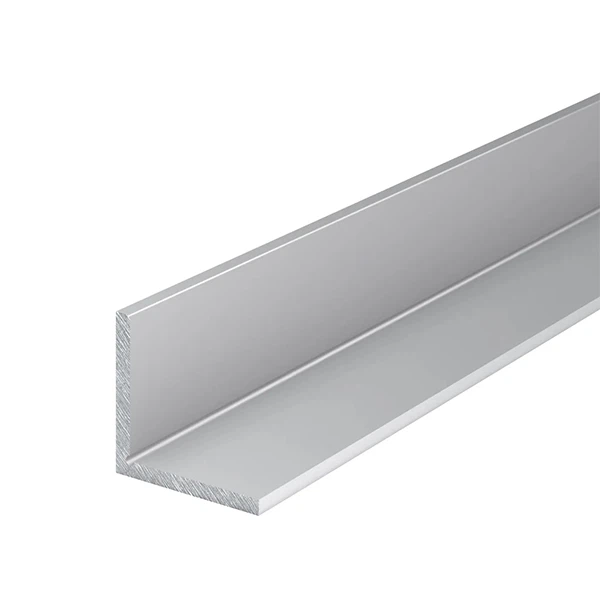
In addition to pure nickel sheets, we also supply related products such as Nickel Alloy Rectangular Section Bar and Nickel Alloy L - Type Profile. These products are also carefully crafted to meet the industry standards and customer requirements.
Contact Us for Procurement
If you are in need of pure nickel sheets or other nickel - based products, we invite you to contact us for procurement. Our team of experts is ready to provide you with detailed product information, technical support, and competitive pricing. Whether you are involved in a small - scale project or a large - scale industrial application, we can offer you the right solutions.
References
- "Metals Handbook: Properties and Selection: Nonferrous Alloys and Pure Metals", ASM International.
- "Physical Metallurgy Principles", Robert W. Cahn, Peter Haasen, and Edward J. Kramer.