

How to improve the reduction of area of titanium alloy?
Hey there! As a titanium alloy supplier, I've been constantly looking for ways to improve the reduction of area of titanium alloy. It's a crucial factor in determining the quality and performance of titanium alloy products, and I'm excited to share some insights and strategies with you in this blog.
First off, let's talk about what the reduction of area means. In simple terms, the reduction of area is a measure of how much a material can deform plastically before it fails. For titanium alloy, a high reduction of area indicates that the material is more ductile and can withstand significant deformation without breaking. This is especially important in applications where the material is subjected to complex stress states, such as in aerospace, automotive, and medical industries.
One of the key factors that affect the reduction of area of titanium alloy is its microstructure. Titanium alloy has a complex crystal structure, and the size, shape, and distribution of its grains can have a significant impact on its mechanical properties, including the reduction of area. Generally speaking, a fine-grained microstructure tends to result in higher ductility and better reduction of area.
So, how can we achieve a fine-grained microstructure in titanium alloy? One effective method is through thermomechanical processing, which combines heat treatment and plastic deformation. By carefully controlling the temperature, deformation rate, and strain level during the processing, we can promote the formation of new grains and refine the existing ones. For example, hot rolling at a suitable temperature range can break up the large grains and create a more uniform and fine-grained structure.
Another important aspect is the alloy composition. Different alloying elements can have different effects on the microstructure and mechanical properties of titanium alloy. For instance, adding small amounts of elements like aluminum and vanadium can strengthen the alloy while maintaining good ductility. However, excessive addition of alloying elements may lead to the formation of brittle phases, which can reduce the reduction of area. Therefore, it's crucial to optimize the alloy composition to achieve the desired properties.
In addition to the processing and composition, the surface condition of the titanium alloy also plays a role in the reduction of area. Surface defects, such as cracks, scratches, and inclusions, can act as stress concentrators and initiate premature failure. To minimize these defects, proper surface finishing operations, such as grinding, polishing, and shot peening, can be employed. These operations not only improve the surface smoothness but also introduce beneficial compressive stresses on the surface, which can enhance the fatigue resistance and reduction of area.
Now, let's take a look at some of the titanium alloy products we offer that have excellent reduction of area. We have the Titanium Gr5 Square Section Bar, which is widely used in aerospace and mechanical engineering applications. This bar is made of Ti-6Al-4V alloy, which has a good balance of strength, ductility, and corrosion resistance. Thanks to our advanced processing techniques, it has a fine-grained microstructure and high reduction of area, making it suitable for applications that require high-performance materials.
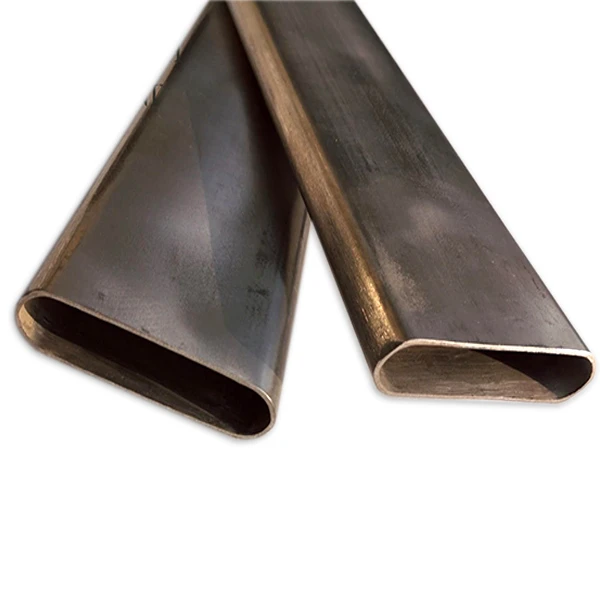
Another popular product is the Titanium Flat Tube. This tube is commonly used in heat exchangers, condensers, and other fluid handling systems. The flat shape provides a larger surface area for heat transfer, and the high reduction of area ensures that the tube can withstand the internal pressure and external forces without leaking or bursting.

We also offer the Titanium Alloy H-type Section Bar, which is suitable for structural applications in various industries. The H-shaped cross-section provides excellent strength and stiffness, and the fine-grained microstructure and good reduction of area ensure the reliability and durability of the structure.
If you're interested in our titanium alloy products or have any questions about improving the reduction of area, don't hesitate to contact us for procurement and further discussions. We're always here to help you find the best solutions for your specific needs.
To sum up, improving the reduction of area of titanium alloy requires a comprehensive approach that considers the processing, composition, and surface condition. By implementing the right strategies and techniques, we can produce high-quality titanium alloy products with excellent mechanical properties. Whether you're in the aerospace, automotive, or medical industry, our titanium alloy products can provide you with the performance and reliability you need.
References
- ASM Handbook: Titanium and Titanium Alloys. ASM International.
- Callister, W. D., & Rethwisch, D. G. (2011). Materials Science and Engineering: An Introduction. Wiley.