

How does the forging temperature affect the quality of forged parts?
Forging is a crucial manufacturing process that shapes metal by applying compressive forces. As a forging and stamping supplier, we understand the significance of various factors that influence the quality of forged parts. One of the most critical factors is the forging temperature. In this blog post, we will explore how the forging temperature affects the quality of forged parts and why it is essential to control this parameter precisely.
Understanding Forging Temperature
Forging temperature refers to the temperature at which the metal is deformed during the forging process. It plays a vital role in determining the mechanical properties, microstructure, and overall quality of the forged parts. There are three main types of forging based on temperature: cold forging, warm forging, and hot forging.
- Cold Forging: Cold forging is performed at room temperature or slightly above. It is suitable for metals with good ductility, such as aluminum and copper. Cold forging offers several advantages, including high precision, good surface finish, and improved mechanical properties due to strain hardening. However, it requires higher forces and may cause cracking or other defects in some metals.
- Warm Forging: Warm forging is carried out at temperatures between room temperature and the recrystallization temperature of the metal. This process combines the advantages of cold and hot forging, offering better formability than cold forging and reduced energy consumption compared to hot forging. Warm forging is commonly used for materials like steel and titanium.
- Hot Forging: Hot forging is performed at temperatures above the recrystallization temperature of the metal. At these high temperatures, the metal becomes more malleable, allowing for easier deformation and the production of complex shapes. Hot forging is widely used for various metals, including steel, aluminum, and titanium.
Effects of Forging Temperature on the Quality of Forged Parts
Microstructure
The forging temperature has a significant impact on the microstructure of the forged parts. At high temperatures, the metal grains recrystallize, resulting in a finer and more uniform grain structure. A fine-grained microstructure improves the mechanical properties of the forged parts, such as strength, toughness, and ductility. In contrast, if the forging temperature is too low, the metal grains may not recrystallize fully, leading to a coarse-grained microstructure. Coarse grains can reduce the mechanical properties of the forged parts and increase the risk of cracking and other defects.
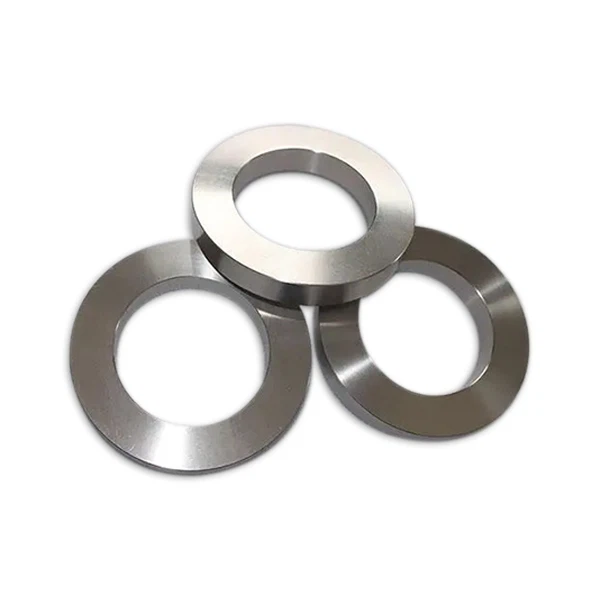
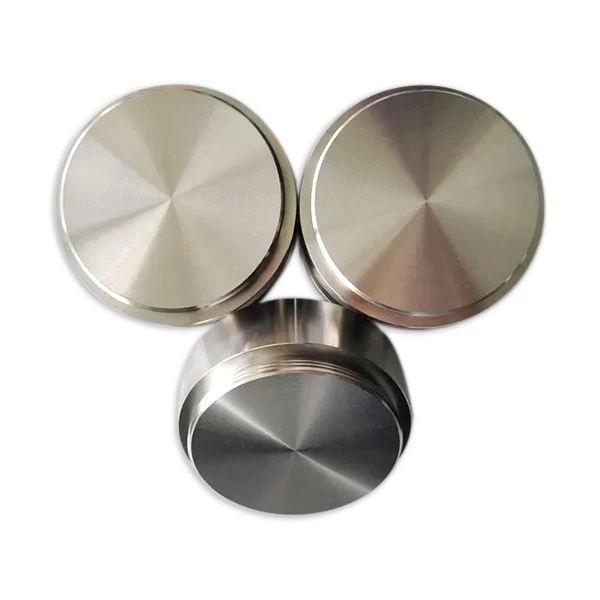
For example, in the case of titanium forgings, a proper hot forging temperature can refine the grain structure of titanium, enhancing its strength and corrosion resistance. Our Titanium Forged Block and Titanium Forging Ring are carefully forged at optimized temperatures to achieve the desired microstructure and mechanical properties.
Mechanical Properties
The forging temperature also affects the mechanical properties of the forged parts. As mentioned earlier, a fine-grained microstructure obtained at the appropriate forging temperature can improve the strength, toughness, and ductility of the parts. Additionally, the forging temperature can influence the hardness and fatigue resistance of the forged parts.
In hot forging, the high temperature allows for better plastic deformation of the metal, which can result in improved mechanical properties. However, if the temperature is too high, the metal may experience excessive grain growth or oxidation, which can degrade the mechanical properties. On the other hand, cold forging can increase the hardness of the metal through strain hardening, but it may also reduce the ductility of the parts.
For instance, our Titanium Round Target is forged at a specific temperature to ensure optimal mechanical properties, making it suitable for various applications.
Surface Quality
The forging temperature can also affect the surface quality of the forged parts. At high temperatures, the metal is more likely to react with the surrounding atmosphere, leading to oxidation and scaling on the surface of the parts. Oxidation can cause surface defects, such as pits and cracks, and reduce the corrosion resistance of the parts. To prevent oxidation, protective coatings or controlled atmospheres can be used during the forging process.
In cold forging, the surface quality is generally better because there is less oxidation. However, cold forging may cause surface roughness due to the high forces involved in the process. Warm forging can offer a good balance between surface quality and formability, as it reduces the risk of oxidation compared to hot forging and produces less surface roughness than cold forging.
Dimensional Accuracy
The forging temperature can have an impact on the dimensional accuracy of the forged parts. During hot forging, the metal expands due to the high temperature and then contracts as it cools down. If the cooling process is not controlled properly, it can lead to dimensional variations and distortion of the parts. To ensure dimensional accuracy, it is essential to control the forging temperature and the cooling rate carefully.
In cold forging, the dimensional accuracy is generally higher because there is less thermal expansion and contraction. However, cold forging may require more precise tooling and higher forces to achieve the desired shape, which can increase the cost of production.
Controlling Forging Temperature
To ensure the quality of forged parts, it is crucial to control the forging temperature precisely. This can be achieved through several methods, including:
- Temperature Measurement: Accurate temperature measurement is essential for controlling the forging temperature. Various temperature measurement techniques can be used, such as thermocouples, infrared pyrometers, and optical pyrometers. These instruments can provide real-time temperature data, allowing operators to adjust the heating or cooling processes accordingly.
- Heating Equipment: The choice of heating equipment is also important for controlling the forging temperature. Induction heating, gas furnaces, and electric furnaces are commonly used for heating the metal before forging. Each type of heating equipment has its advantages and disadvantages, and the selection depends on factors such as the type of metal, the forging temperature, and the production volume.
- Cooling Process: The cooling process after forging is also critical for controlling the forging temperature and the quality of the forged parts. The cooling rate can affect the microstructure and mechanical properties of the parts. Different cooling methods, such as air cooling, water quenching, and oil quenching, can be used depending on the requirements of the parts.
Conclusion
As a forging and stamping supplier, we recognize the crucial role that forging temperature plays in determining the quality of forged parts. The forging temperature affects the microstructure, mechanical properties, surface quality, and dimensional accuracy of the parts. By carefully controlling the forging temperature, we can ensure that our customers receive high-quality forged parts that meet their specific requirements.
If you are in need of high-quality forged parts, whether it's our Titanium Forged Block, Titanium Round Target, or Titanium Forging Ring, please feel free to contact us for procurement and negotiation. We are committed to providing you with the best products and services.
References
- Dieter, G. E. (1988). Mechanical Metallurgy. McGraw-Hill.
- Kalpakjian, S., & Schmid, S. R. (2014). Manufacturing Engineering and Technology. Pearson.
- ASM Handbook, Volume 14A: Metalworking: Forging. ASM International.