

Do titanium frying pans have a non - stick coating?
Do titanium frying pans have a non - stick coating? That's a question I get asked a lot as a titanium frying pan supplier. Let's dig into this topic and find out the real deal.
First off, let's talk about titanium. Titanium is an amazing metal. It's super strong, lightweight, and resistant to corrosion. These properties make it a great choice for all sorts of products, not just frying pans. You can even find titanium used in cool stuff like the Titanium Camping Spork and Titanium Alloy Dice Toy.
Now, back to the frying pans. Some titanium frying pans do come with a non - stick coating, while others don't. The ones with a non - stick coating are pretty popular because they make cooking and cleaning a breeze. You can cook your eggs, pancakes, or stir - fry your veggies without worrying too much about them sticking to the pan.
The non - stick coatings on titanium frying pans are usually made of materials like Teflon (PTFE) or ceramic. Teflon has been around for a long time and is known for its excellent non - stick properties. It creates a smooth surface that food slides right off. However, in recent years, there have been some concerns about the safety of Teflon, especially when it's overheated. When Teflon reaches high temperatures, it can release harmful fumes. So, if you're using a Teflon - coated titanium frying pan, it's important to keep the heat at a reasonable level.
On the other hand, ceramic non - stick coatings are becoming more and more popular. They're considered to be a safer alternative to Teflon. Ceramic coatings are made from natural materials and are free from many of the chemicals that people worry about in Teflon. They also offer good non - stick performance, although they might not be as durable as Teflon in some cases.
But what about titanium frying pans without a non - stick coating? Well, pure titanium itself isn't a great non - stick material. It has a relatively high surface energy, which means that food is more likely to stick to it. However, some manufacturers use special treatments on the surface of the titanium to improve its non - stick properties. For example, they might use a process called anodizing. Anodizing creates a hard, porous surface on the titanium that can trap a thin layer of oil. This oil layer acts as a natural non - stick barrier.

The advantage of non - coated titanium frying pans is that you don't have to worry about the potential health risks associated with non - stick coatings. They're also more durable in the long run because there's no coating that can chip or peel off. But they do require a bit more skill and attention when cooking. You need to pre - heat the pan properly and use enough oil to create that non - stick effect.
When it comes to choosing between a coated and non - coated titanium frying pan, it really depends on your personal preferences and cooking habits. If you're a beginner cook or you want the easiest possible cooking experience, a coated titanium frying pan might be the way to go. But if you're an experienced cook who doesn't mind putting in a bit more effort and wants a more natural and long - lasting option, a non - coated pan could be a better fit.
Another thing to consider is the price. Coated titanium frying pans are usually more expensive than non - coated ones. This is because of the cost of the coating material and the additional manufacturing processes involved. But if you think about the convenience and the long - term savings on cleaning products, it might be worth the extra investment.
Now, let's talk about how to take care of your titanium frying pans, whether they're coated or not. For coated pans, you should avoid using metal utensils. Metal can scratch the non - stick coating, which will reduce its effectiveness and shorten the lifespan of the pan. Instead, use wooden, silicone, or nylon utensils. Also, don't stack your coated pans on top of each other, as this can also cause the coating to scratch.
For non - coated titanium frying pans, you can use metal utensils, but you still need to be careful not to scratch the surface. After each use, wash the pan with warm, soapy water and a soft sponge. If there are any stubborn stains, you can soak the pan in warm water for a while before scrubbing.
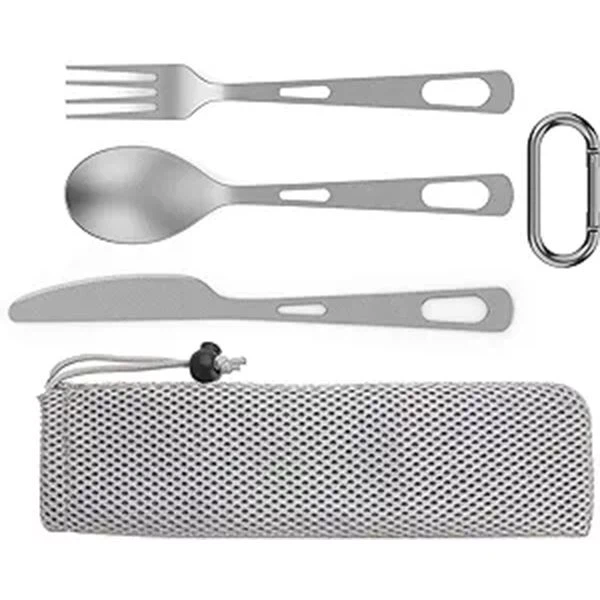
In addition to frying pans, titanium is also used in other kitchenware, like the Camping Set Cutlery. Titanium cutlery is lightweight, strong, and resistant to corrosion, making it perfect for camping or outdoor activities.
If you're in the market for a titanium frying pan or any other titanium kitchenware, I'd love to help you out. I've been in the business for a long time and have a wide range of high - quality products. Whether you're looking for a coated or non - coated titanium frying pan, I can provide you with the information you need to make an informed decision.
If you're interested in learning more or making a purchase, feel free to reach out. We can have a chat about your specific needs and I'll do my best to find the perfect product for you. Let's start a conversation and see how we can work together to get you the best titanium kitchenware for your home.
References:
- "Cookware Materials and Their Properties" - Journal of Kitchen Science
- "The Safety of Non - Stick Coatings" - Food and Nutrition Research Institute
- "Anodizing of Titanium for Improved Surface Properties" - Materials Science Journal