

What is the weight of titanium fasteners?
What is the Weight of Titanium Fasteners?
As a dedicated supplier of titanium fasteners, I've often encountered inquiries about the weight of these remarkable components. Titanium fasteners have gained significant popularity across various industries due to their unique combination of properties, and weight is a crucial factor in many applications. In this blog post, I'll delve into the weight aspects of titanium fasteners, exploring what influences their weight and why it matters.
Understanding Titanium's Density
Titanium is well - known for its low density compared to many other metals commonly used for fasteners, such as steel. The density of pure titanium is approximately 4.51 g/cm³, while the density of mild steel is around 7.85 g/cm³. This significant difference in density means that, for a given volume, titanium fasteners will weigh substantially less than their steel counterparts.
For example, if we consider a simple bolt with a specific length and diameter, a titanium bolt will be about 40% lighter than a steel bolt of the same dimensions. This weight advantage is particularly beneficial in applications where weight reduction is a priority, such as aerospace, automotive, and high - performance sports equipment.

Factors Affecting the Weight of Titanium Fasteners
- Alloy Composition
Titanium is often alloyed with other elements to enhance its properties. Different titanium alloys have slightly different densities. For instance, the widely used GR5 titanium alloy (Ti - 6Al - 4V), which is known for its excellent strength - to - weight ratio, has a density of around 4.43 g/cm³. The addition of aluminum and vanadium in GR5 titanium results in a slightly lower density compared to pure titanium. You can find our high - quality GR5 Titanium Fasteners in our product range, which offer a great balance of strength and light weight. - Size and Dimensions
The size and dimensions of the fastener play a crucial role in determining its weight. Larger fasteners with greater diameters and lengths will naturally weigh more than smaller ones. For example, a large titanium hexagon socket head bolt will weigh more than a small one. Our Titanium Hexagon Socket Head Bolt comes in various sizes to meet different application requirements, and you can choose the appropriate size based on your weight and strength needs. - Design and Shape
The design and shape of the fastener also impact its weight. Some fasteners may have complex geometries or additional features, which can increase their weight. For example, a fastener with a more elaborate head design or a built - in locking mechanism may weigh more than a standard, simple - shaped fastener.
Applications Where Weight Matters
- Aerospace Industry
In the aerospace industry, every gram counts. The use of titanium fasteners helps to reduce the overall weight of aircraft, which in turn leads to improved fuel efficiency, increased payload capacity, and better performance. By replacing steel fasteners with titanium ones, aerospace manufacturers can achieve significant weight savings without sacrificing strength and reliability. - Automotive Industry
In high - performance and racing cars, weight reduction is essential for improving acceleration, handling, and fuel economy. Titanium fasteners are used in critical components such as engines, suspension systems, and exhaust systems to reduce weight and enhance performance. - Bicycle Industry
Cyclists are always looking for ways to reduce the weight of their bikes to improve speed and handling. Titanium fasteners, such as Titanium Anodizing Bolts For Bicycle, are popular in the bicycle industry due to their light weight and corrosion resistance. These fasteners not only help to reduce the overall weight of the bike but also add a touch of style with their anodized finishes.
Calculating the Weight of Titanium Fasteners
Calculating the weight of a titanium fastener can be done using the basic formula for density:
[ \text{Weight} = \text{Density} \times \text{Volume} ]
To find the volume of a fastener, you need to know its shape. For simple shapes like cylinders (bolts), the volume formula is ( V=\pi r^{2}h ), where ( r ) is the radius and ( h ) is the height (length) of the bolt. Once you have calculated the volume and know the density of the titanium alloy used, you can easily determine the weight of the fastener.
However, in real - world scenarios, fasteners often have more complex shapes, and manufacturers usually provide weight specifications for their products based on accurate measurements and calculations.

Weight vs. Strength
While weight is an important factor, it's essential to consider the strength of titanium fasteners as well. Titanium offers excellent strength - to - weight ratio, which means that it can provide high strength while still being relatively light. In many applications, the combination of light weight and high strength is what makes titanium fasteners the preferred choice.
For example, in aerospace applications, titanium fasteners need to withstand high stresses and loads while contributing to weight reduction. Our titanium fasteners are engineered to meet these demanding requirements, providing reliable performance in even the most challenging environments.
Why Choose Our Titanium Fasteners
As a supplier of titanium fasteners, we take pride in offering high - quality products that meet the strictest industry standards. Our fasteners are made from top - grade titanium alloys, ensuring excellent strength, corrosion resistance, and light weight. We have a wide range of products available, including different sizes and types of fasteners, to meet the diverse needs of our customers.
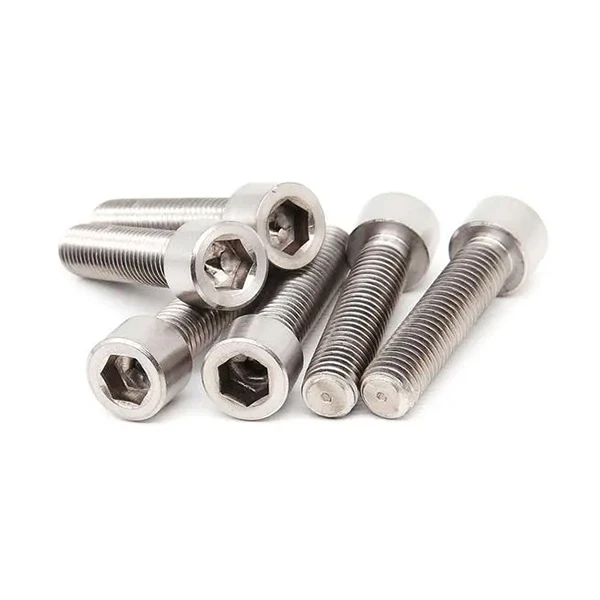
Whether you're in the aerospace, automotive, or bicycle industry, our titanium fasteners can help you achieve your weight reduction and performance goals. We also provide custom - made fasteners to meet specific requirements, ensuring that you get the perfect solution for your application.
Contact Us for Procurement
If you're interested in our titanium fasteners and would like to discuss your procurement needs, we'd be more than happy to hear from you. Our team of experts can provide you with detailed information about our products, help you select the right fasteners for your application, and offer competitive pricing.
We believe that our high - quality titanium fasteners, combined with our excellent customer service, make us the ideal partner for your fastener needs. So, don't hesitate to reach out and start a conversation with us.

References
- ASM Handbook Committee, "ASM Handbook Volume 2: Properties and Selection: Nonferrous Alloys and Special - Purpose Materials", ASM International, 2001.
- Boyer, R. R., Welsch, G., and Collings, E. W., "Materials Properties Handbook: Titanium Alloys", ASM International, 1994.