

What is the effect of impurities on the properties of titanium alloy?
Hey there! As a titanium alloy supplier, I've seen firsthand how impurities can have a real impact on the properties of this amazing material. Let's dive into what those effects are and why it matters.
First off, let's talk about what titanium alloy is. It's a metal made by combining titanium with other elements like aluminum, vanadium, or molybdenum. This creates a material that's super strong, lightweight, and resistant to corrosion. It's used in all sorts of industries, from aerospace and automotive to medical and sports equipment.

But here's the thing: even the purest titanium alloy still has some impurities. These can come from a variety of sources, like the raw materials used to make the alloy, the manufacturing process, or even the environment. And while a little bit of impurity might not seem like a big deal, it can actually have a significant impact on the properties of the alloy.
One of the most obvious effects of impurities is on the strength of the titanium alloy. Some impurities can act as weak points in the material, making it more likely to break or deform under stress. For example, if there are impurities in the form of small cracks or voids, these can act as starting points for fractures. This can be a major problem in applications where the alloy needs to withstand high loads, like in aircraft wings or engine components.
On the other hand, some impurities can actually increase the strength of the alloy. For instance, certain elements like nitrogen or oxygen can form hard particles within the alloy, which can help to strengthen it. However, this only works if the impurities are present in the right amount and in the right form. If there's too much of these elements, it can actually have the opposite effect and make the alloy more brittle.
Another important property that can be affected by impurities is the corrosion resistance of the titanium alloy. Titanium is known for its excellent corrosion resistance, but impurities can undermine this. Some impurities can react with the surrounding environment, causing the alloy to corrode more quickly. For example, if there are impurities in the form of reactive metals like iron or copper, these can form galvanic cells with the titanium, which can accelerate corrosion.
In addition to strength and corrosion resistance, impurities can also affect other properties of the titanium alloy, such as its ductility, toughness, and thermal conductivity. For example, impurities can reduce the ductility of the alloy, making it less able to be bent or formed without cracking. This can be a problem in applications where the alloy needs to be shaped into complex forms, like in jewelry or medical implants.
So, how do we deal with impurities in titanium alloy? Well, as a supplier, we take a number of steps to minimize the presence of impurities in our products. First, we carefully select the raw materials we use to make the alloy. We work with high-quality suppliers who can provide us with pure titanium and other elements. We also use advanced manufacturing processes that are designed to reduce the amount of impurities that are introduced during production.
For example, we use vacuum arc remelting (VAR) to refine the titanium alloy. This process involves melting the alloy in a vacuum chamber, which helps to remove impurities like gases and non-metallic inclusions. We also use electron beam melting (EBM) to further refine the alloy and improve its purity.
In addition to these manufacturing processes, we also perform rigorous quality control checks on our products. We use a variety of techniques, such as chemical analysis, microscopy, and mechanical testing, to ensure that our titanium alloy meets the highest standards of purity and quality.
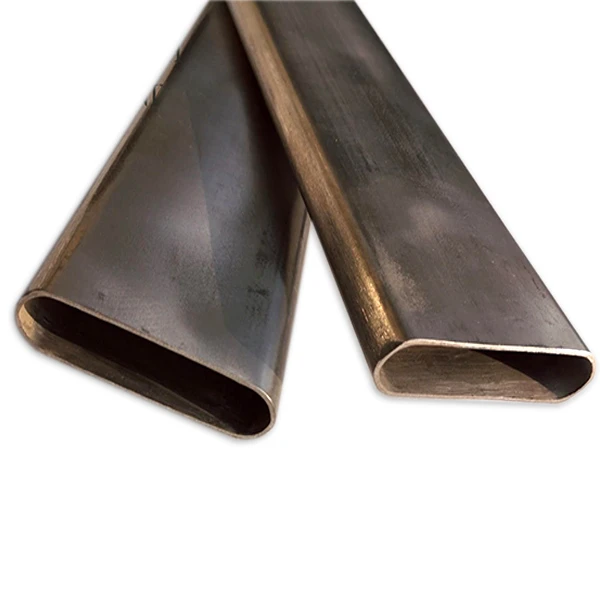
Now, let's talk about some of the specific products we offer as a titanium alloy supplier. We have a wide range of titanium alloy products, including Titanium Alloy L- Type Section Bar, Titanium Alloy Rectangular Section Bar, and Titanium Flat Tube. These products are made from high-quality titanium alloy that has been carefully processed to minimize the presence of impurities.
Our titanium alloy section bars are available in a variety of sizes and shapes, and they're ideal for use in a wide range of applications, from structural components to decorative elements. Our titanium flat tubes are also popular, especially in the automotive and aerospace industries, where they're used for things like fuel lines and hydraulic systems.
If you're in the market for high-quality titanium alloy products, we'd love to hear from you. Whether you're a manufacturer looking for a reliable supplier of titanium alloy, or you're an engineer or designer looking for the perfect material for your next project, we can help. We have the expertise and experience to provide you with the right titanium alloy products for your needs, and we're committed to providing you with the highest level of customer service.
So, if you're interested in learning more about our titanium alloy products, or if you have any questions about the effects of impurities on the properties of titanium alloy, please don't hesitate to contact us. We'd be happy to discuss your requirements and provide you with a quote.
References:
- "Titanium and Titanium Alloys: Fundamentals and Applications" by John C. Williams
- "The Effect of Impurities on the Properties of Titanium Alloys" by R. W. Cahn and P. Haasen
- "Corrosion Resistance of Titanium Alloys" by D. A. Jones