

What are the differences between titanium and aluminum fasteners?
When it comes to fasteners, two materials that often come into consideration are titanium and aluminum. As a seasoned titanium fasteners supplier, I've witnessed firsthand the unique characteristics and applications of both materials. In this blog post, I'll delve into the differences between titanium and aluminum fasteners, helping you make an informed decision for your specific needs.
Physical Properties
One of the most significant differences between titanium and aluminum fasteners lies in their physical properties. Titanium is renowned for its exceptional strength - to - weight ratio. It is approximately 45% lighter than steel but offers comparable strength. This makes titanium fasteners ideal for applications where weight reduction is crucial, such as aerospace and automotive industries. For instance, in aircraft manufacturing, every ounce counts, and titanium fasteners can significantly contribute to reducing the overall weight of the aircraft, leading to improved fuel efficiency.
On the other hand, aluminum is also a lightweight metal, but it is not as strong as titanium. Aluminum fasteners are about one - third the weight of steel, but their strength is relatively lower. They are commonly used in applications where strength requirements are not extremely high, such as in consumer electronics or some general - purpose machinery.
Another aspect of physical properties is corrosion resistance. Titanium has excellent corrosion resistance, even in harsh environments such as saltwater and chemical - rich atmospheres. This is due to the formation of a thin, protective oxide layer on its surface, which prevents further oxidation. Aluminum also has good corrosion resistance, as it forms a natural oxide layer. However, this layer is less stable than that of titanium and can be damaged more easily, especially in acidic or alkaline conditions.
Mechanical Properties
In terms of mechanical properties, titanium fasteners have a high modulus of elasticity, which means they can withstand significant stress without deforming permanently. They also have a high fatigue strength, making them suitable for applications with cyclic loading, like in the engines of vehicles. Titanium fasteners can maintain their integrity over a long period of use, even under repeated stress.
Aluminum fasteners, in contrast, have a lower modulus of elasticity and fatigue strength compared to titanium. They are more prone to deformation and failure under high - stress or cyclic - loading conditions. However, aluminum is more ductile than titanium, which means it can be easily formed into various shapes during the manufacturing process.
Cost
Cost is an important factor when choosing between titanium and aluminum fasteners. Titanium is generally more expensive than aluminum. The high cost of titanium is mainly due to its complex extraction and processing methods. Titanium ore needs to go through a series of chemical and physical processes to obtain pure titanium, which is energy - intensive and time - consuming.
Aluminum, on the other hand, is more abundant in the earth's crust and is relatively easier to extract and process. This makes aluminum fasteners more cost - effective, especially for large - scale applications where cost is a major concern. However, in applications where the unique properties of titanium are essential, such as in high - performance aerospace components, the higher cost may be justified.
Applications
The differences in properties between titanium and aluminum fasteners lead to different application scenarios. Titanium fasteners are widely used in the aerospace industry, where their high strength - to - weight ratio and corrosion resistance are highly valued. For example, in aircraft engines, GR5 Titanium Fasteners are often used to ensure reliable connections under extreme conditions. They are also used in the medical field, as titanium is biocompatible and can be used in implants and surgical instruments.
Aluminum fasteners are commonly found in consumer products, such as smartphones and laptops. Their lightweight and relatively low cost make them a popular choice for these applications. They are also used in some construction projects, especially in non - structural components where weight reduction and cost - effectiveness are important.
Manufacturing and Machinability
Titanium is more difficult to machine compared to aluminum. Its high strength and low thermal conductivity make it prone to work hardening during machining, which can lead to tool wear and poor surface finish. Specialized machining techniques and tools are often required to work with titanium. For example, when manufacturing Titanium Hexagon Socket Head Bolt, precise control of cutting parameters is necessary to ensure the quality of the final product.
Aluminum, on the other hand, is much easier to machine. It has good machinability, which allows for high - speed machining and the production of complex shapes with relative ease. This makes the manufacturing process of aluminum fasteners more efficient and cost - effective.
Appearance
The appearance of titanium and aluminum fasteners can also be different. Titanium has a distinctive silver - gray color, which can give a high - end and industrial look. It can also be anodized to produce different colors, adding to its aesthetic appeal.
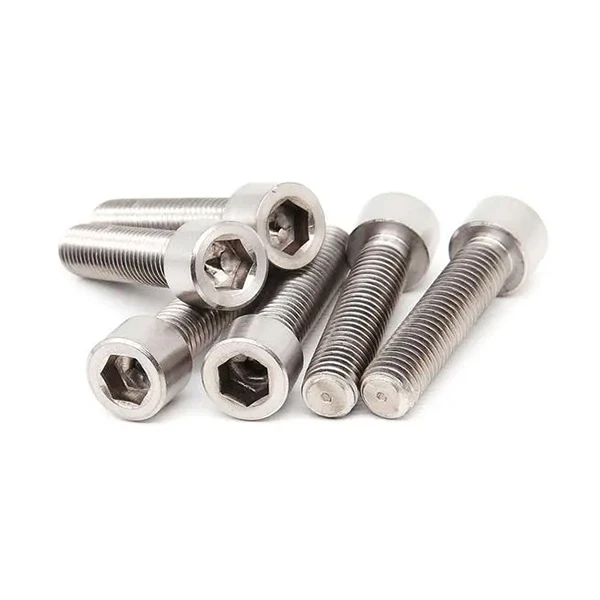

Aluminum has a bright, shiny surface when freshly machined. It can also be anodized or painted to achieve different colors and finishes, but its appearance is generally more common and less unique compared to titanium.
As a titanium fasteners supplier, I understand that choosing the right fasteners for your project is crucial. Whether you need the high - performance properties of titanium or the cost - effectiveness of aluminum, I can provide you with professional advice and high - quality products. If you are interested in our Gr5 Titanium Hexagon Head Bolt or other titanium fasteners, feel free to contact me for a detailed discussion about your requirements. We can work together to find the best solution for your specific application.
References
- ASM Handbook Committee. (2000). ASM Handbook, Volume 2: Properties and Selection: Nonferrous Alloys and Special - Purpose Materials. ASM International.
- Callister, W. D., & Rethwisch, D. G. (2011). Materials Science and Engineering: An Introduction. Wiley.
- Davis, J. R. (2000). Titanium: A Technical Guide. ASM International.