

How to design dies for forging and stamping?
Designing dies for forging and stamping is a crucial process that directly impacts the quality, efficiency, and cost of manufacturing. As a forging and stamping supplier, I've been involved in this field for quite some time, and I'd like to share some insights on how to design these dies effectively.
Understanding the Basics
Before diving into the design process, it's essential to understand the fundamental differences between forging and stamping. Forging is a process where metal is heated and then shaped by applying compressive forces, usually using a hammer or a press. Stamping, on the other hand, involves cutting, bending, or forming metal sheets using a die and a press.
The first step in designing dies for forging and stamping is to have a clear understanding of the final product requirements. This includes the dimensions, tolerances, surface finish, and mechanical properties of the part. For example, if you're designing a die for a Titanium Forged Block, you need to know the exact size, shape, and the level of hardness required for the block.
Material Selection
The choice of material for the die is critical. It needs to withstand the high pressures, temperatures, and wear and tear associated with forging and stamping processes. Common materials used for dies include tool steels, high-speed steels, and carbide.
Tool steels are a popular choice because they offer a good balance of strength, toughness, and wear resistance. High-speed steels are known for their ability to maintain their hardness at high temperatures, making them suitable for high-volume production. Carbide, on the other hand, is extremely hard and wear-resistant, but it can be brittle and more expensive.
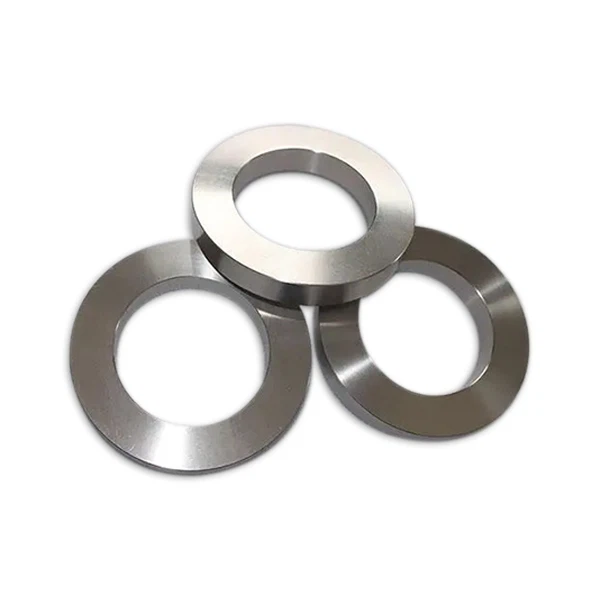
When selecting the material, you also need to consider the type of metal you'll be forging or stamping. For instance, titanium alloys are known for their high strength and low density, but they can be difficult to work with. If you're designing a die for a Titanium Forging Ring, you might need a die material that can handle the unique properties of titanium.

Design Considerations
- Geometry: The die's geometry should be designed to ensure proper material flow during the forging or stamping process. This means minimizing sharp corners and edges, which can cause stress concentrations and lead to premature die failure. The shape of the die should also allow for easy ejection of the finished part.
- Draft Angles: Draft angles are essential in both forging and stamping dies. They help in the easy removal of the part from the die. The draft angle depends on the material being processed and the complexity of the part. Generally, a draft angle of 3 - 5 degrees is common for most applications.
- Clearance: In stamping dies, proper clearance between the punch and the die is crucial. Too little clearance can cause excessive wear on the die and the punch, while too much clearance can result in poor part quality, such as burrs or rough edges. The clearance is typically determined by the thickness and type of the metal sheet being stamped.
- Cooling and Lubrication: Forging and stamping generate a significant amount of heat, which can affect the die's performance and lifespan. Incorporating cooling channels in the die design can help dissipate the heat. Lubrication is also essential to reduce friction between the die and the workpiece, which can improve the surface finish of the part and reduce wear on the die.
Simulation and Testing
Once the initial design is complete, it's a good idea to use computer-aided engineering (CAE) software to simulate the forging or stamping process. Simulation can help identify potential problems, such as material flow issues, stress concentrations, and die wear patterns. This allows you to make adjustments to the design before manufacturing the actual die.
After simulation, it's important to conduct physical testing. This can involve making a prototype die and testing it with a small batch of workpieces. Testing can reveal any real-world issues that might not have been apparent during the simulation, such as problems with part ejection or die alignment.
Cost-Effectiveness
Designing a die is not just about creating a functional tool; it's also about doing it in a cost-effective manner. This means optimizing the design to reduce material waste, minimizing the number of machining operations, and using standard components whenever possible.
For example, if you're designing a die for a Gr2 Titanium Forged Flange, you can look for ways to use the same die for multiple part sizes or designs, which can reduce the overall cost of die production.
Continuous Improvement
The field of forging and stamping is constantly evolving, with new materials, processes, and technologies emerging all the time. As a supplier, it's important to stay updated with the latest trends and continuously improve your die design process.
This can involve investing in new equipment, such as advanced CNC machining centers, which can produce more precise dies. It also means collaborating with customers and industry partners to learn from their experiences and incorporate new ideas into your designs.
Conclusion
Designing dies for forging and stamping is a complex but rewarding process. By understanding the basics, selecting the right materials, considering all the design factors, conducting simulation and testing, and focusing on cost-effectiveness, you can create high-quality dies that meet the needs of your customers.
If you're in the market for forging and stamping products or need help with die design, don't hesitate to reach out. We're here to provide you with the best solutions and support for your manufacturing needs. Let's start a conversation and see how we can work together to achieve your goals.
References
- Dieter, G. E. (1988). Mechanical Metallurgy. McGraw-Hill.
- Kalpakjian, S., & Schmid, S. R. (2008). Manufacturing Engineering and Technology. Pearson.
- Lindberg, K. (2002). Metal Forming: Process and Design. Society of Manufacturing Engineers.