

How do I ensure proper alignment when installing titanium fasteners?
Ensuring proper alignment when installing titanium fasteners is crucial for the structural integrity and performance of any project. As a trusted titanium fasteners supplier, I understand the importance of this process and have gathered valuable insights to share with you. In this blog, I'll guide you through the steps and techniques to ensure that your titanium fasteners are installed with perfect alignment every time.
Understanding Titanium Fasteners
Before delving into the alignment process, it's essential to understand the unique properties of titanium fasteners. Titanium is renowned for its high strength-to-weight ratio, excellent corrosion resistance, and biocompatibility. These properties make it a popular choice in various industries, including aerospace, automotive, and medical.
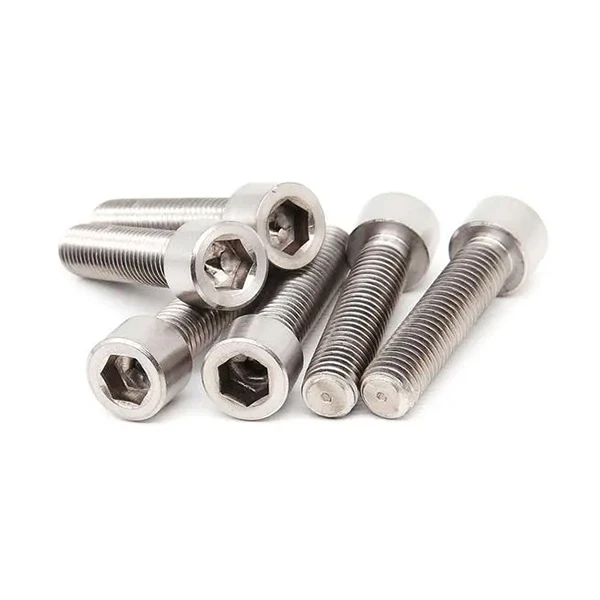
There are different types of titanium fasteners available, each designed for specific applications. For example, the Titanium Hexagon Socket Head Bolt is commonly used in applications where a low-profile, high-strength fastener is required. The GR5 Titanium Fasteners are made from Ti-6Al-4V, a widely used titanium alloy known for its excellent mechanical properties. And the Titanium Nylon Self-Locking Hex Nut provides a reliable locking mechanism to prevent loosening due to vibration.
Preparation for Installation
Proper preparation is the first step in ensuring proper alignment during the installation of titanium fasteners. Here are some key aspects to consider:
1. Surface Preparation
The surfaces where the fasteners will be installed must be clean, smooth, and free of any debris, rust, or contaminants. Use a suitable cleaning agent to remove any dirt or oil from the surfaces. If necessary, use a fine-grit sandpaper to smooth out any rough areas. A clean and smooth surface ensures that the fasteners sit flush and align correctly.
2. Hole Preparation
If the fasteners are being installed into pre-drilled holes, ensure that the holes are the correct size and depth. The hole diameter should match the fastener's thread size, and the depth should be sufficient to accommodate the fastener fully. Use a drill bit of the appropriate size and a depth gauge to ensure accuracy. Deburr the holes to remove any sharp edges that could damage the fastener threads.
3. Fastener Inspection
Before installation, inspect each titanium fastener for any signs of damage, such as cracks, dents, or deformed threads. Damaged fasteners should not be used, as they can compromise the alignment and performance of the joint. Check the fastener's dimensions to ensure they match the specifications required for the application.
Alignment Techniques
Once the preparation is complete, it's time to focus on the alignment techniques during the installation process. Here are some effective methods:
1. Use of Alignment Jigs
Alignment jigs are tools designed to ensure that the fasteners are installed in the correct position and orientation. They can be custom-made or purchased commercially. An alignment jig holds the fastener in place while it is being installed, preventing it from shifting or tilting. This is especially useful when installing multiple fasteners in a pattern or when precise alignment is required.
2. Thread Engagement
Proper thread engagement is essential for both alignment and the strength of the joint. When installing the fastener, start the threads by hand to ensure they are properly aligned. Do not force the fastener if it does not start smoothly, as this can cross-thread the fastener and lead to misalignment. Once the threads are engaged, use a suitable tool, such as a torque wrench, to tighten the fastener to the recommended torque value. Over-tightening or under-tightening can affect the alignment and the performance of the joint.
3. Visual Inspection
During the installation process, visually inspect the fastener's alignment regularly. Check that the fastener is perpendicular to the surface and that it is centered in the hole. If any misalignment is detected, stop the installation immediately and correct the issue. A small misalignment at the beginning can lead to significant problems later on, so it's important to address it as soon as possible.
4. Use of Laser Alignment Tools
For high-precision applications, laser alignment tools can be used to ensure accurate alignment. These tools project a laser beam that can be used as a reference line to align the fasteners. They are particularly useful in large-scale projects or when aligning fasteners over long distances.
Quality Control
After the installation of the titanium fasteners, it's important to perform quality control checks to ensure that the alignment is correct and the joint is secure. Here are some checks you can perform:
1. Torque Verification
Use a torque wrench to verify that the fasteners have been tightened to the recommended torque value. This ensures that the joint has the proper clamping force and that the fasteners are not over-tightened or under-tightened. Any deviation from the recommended torque value can indicate misalignment or other issues.
2. Visual Inspection
Conduct a final visual inspection of the installed fasteners. Check for any signs of misalignment, such as a fastener that is not flush with the surface or that is tilted. Look for any signs of damage or deformation to the fastener or the surrounding material. If any issues are detected, take corrective action immediately.
3. Functionality Testing
Depending on the application, perform functionality testing to ensure that the joint operates as intended. This could involve applying a load or performing a test run to check for any signs of loosening or failure. If the joint does not perform as expected, it may be necessary to recheck the alignment and make any necessary adjustments.

Conclusion
Ensuring proper alignment when installing titanium fasteners is a critical process that requires careful preparation, the use of appropriate techniques, and thorough quality control. By following the steps outlined in this blog, you can minimize the risk of misalignment and ensure the structural integrity and performance of your projects.
As a titanium fasteners supplier, we are committed to providing high-quality products and technical support to our customers. If you have any questions or need further assistance with the installation of titanium fasteners, please feel free to contact us for procurement and consultation. We look forward to working with you on your next project.
References
- ASM Handbook Volume 22A: Fundamentals of Modeling for Metals Processing. ASM International.
- Titanium: A Technical Guide. Don Eylon, William F. Boyer, and Harry A. Rosenberg. ASM International.
- Fastener Technology Handbook. Herbert H. Ross. Industrial Press Inc.